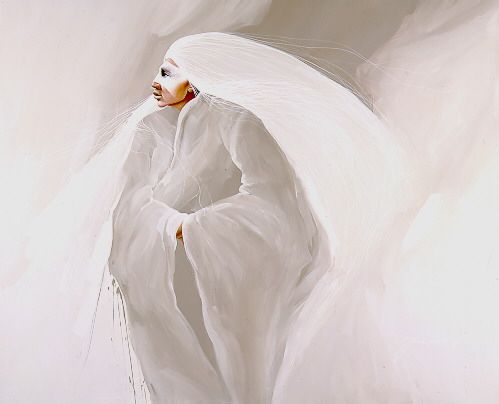
Anadarko (from Nädä'ko, their own name). A tribe of the Caddo confederacy whose dialect was spoken by the Kadohadacho, Hainai and Adai. The earliest mention of the people is in the relation of Biedma (1544); who writes that Moscoso in 1542 led his men during their southward march through a province that lay east of the Anadarko.
The territory occupied by the tribe was southwest of the Kadohadacho. Their villages were scattered along Trinity and Brazos Rivers, Texas, higher up than those of the Hainai, and do not seem to have been visited so early as theirs by the French.
A Spanish mission was established among the Anadarko early in the 18th century, but was soon abandoned. La Harpe reached an Anadarko village in 1719, and was kindly received. The people shared in the general friendliness for the French. During the contentions of the latter with the Spaniards and later with the English, throughout the 18th century, the Anadarko suffered greatly. They became embroiled in tribal wars; their villages were abandoned; and those who survived the havoc of war and the new diseases brought into the country by the white people were forced to seek shelter and safety with their kindred toward the north east.
In 1812 a village of 40 men and 200 souls was reported on Sabine River. The Anadarko lived in villages, having fixed habitations similar to those of the other tribes of the Caddo confederacy, to whom they were evidently also similar in customs, beliefs, and clan organization. Nothing is known definitely of the subdivisions of the tribe, but that such existed is probable from the fact that the people were scattered over a considerable territory and lived in a number of villages.
They are now incorporated with the Caddo on the allotted Wichita reservation in Oklahoma. The town of Anadarko perpetuates the tribal name.
Wednesday, January 2, 2008


Indians denied home loans
By: Mike Nowatzki
Willard Yellow Bird says he wanted to buy a home in his native North Dakota.
Yellow Bird, an Arikara from White Shield on the Fort Berthold Indian Reservation, ended up in Moorhead instead because he and his wife were able to get a low-interest mortgage through a program offered by her tribe, the Red Lake Band of Chippewa.
“The only stipulation was we had to live in Minnesota,” he said.
But Yellow Bird isn’t complaining. Many other American Indians who try to get home loans aren’t as successful.
A Forum analysis of home loan applications for 2006 found that lenders denied one out of every three applications made by American Indians in North Dakota and more than one out of every four in Minnesota.
American Indians are North Dakota’s largest racial minority, accounting for 5.2 percent of the state’s population in 2006, according to the U.S. Census Bureau.
Indians accounted for 1.1 percent of the state’s home loan applications last year.
“I think a lot of the Natives don’t even try,” said Yellow Bird, safety coordinator for the city of Fargo and a liaison to the city’s Native American Commission. “They’re just so used to getting denied.”
Want to know more? Click here: http://www.in-forum.com/articles/index.cfm?id=187455§ion=News&freebie_check&CFID=79424037&CFTOKEN=32887088&jsessionid=88308ba2f670234c5753
Anglers Continue to Protest Nez Perce Gillnetting
Associated Press
LEWISTON -- Anglers in northcentral Idaho continue to protest the recent decision by the Nez Perce tribe to start gill net fishing for steelhead on the Clearwater and Snake rivers.
The group Sportsmen for Fish and Wildlife is holding meetings to protest the move.
Jason Hollibaugh says time and money have gone into restoring runs of wild steelhead.
All that could be damaged if the tribe starts gill netting the fish, which could result in indiscriminate taking of wild fish.
The tribe, meanwhile, is asking for a fair examination of their fishery impacts, not just criticism over the method.
Clifford Allen, a tribal member, says an 1855 treaty gives the tribe the right to harvest fish on tribal lands -- as it pleases.
Tlingit Treasures
Associated Press
JUNEAU, Alaska (AP)- A Juneau man has donated four ancient stone objects, including tools and a carved seal head, to the Sealaska Heritage Institute.
Ronald Haffner donated a maul, a bowl, a grinder and a carved stone seal head to the institute. Institute President Rosita Worl, an anthropologist, said the items will be displayed at Sealaska Plaza in Juneau after they are studied.
Haffner said the objects probably were dug up by his great-grandmother in the 1930s at the site of the first commercial farm in Juneau.
"I'm glad we can finally put them out there and give them back to the Native community so everyone can see and enjoy them and learn about them," Haffner said.
The cultural treasures were passed down through the family. Haffner made the donation earlier this month to honor his grandmother, Edith Trambitas, who cherished the items for 50 years before giving them to her son. Trambitas died in November 2006.
The items are considered to be the most significant addition to the institute's collection in recent years.
They join 300 artifacts, 20,000 photographs and 750 linear feet of manuscript material housed at the institute, an arm of Sealaska, an Alaska Native regional corporation created by the Alaska Native Claims Settlement Act.
Read more here: http://www.reznetnews.org/article/news/tlingit-treasures
Monday, December 31, 2007
Featured Website: Four Directions Solidarity Network
Our Mission: Four Directions Solidarity Network unites a grassroots movement of both native and non-native people from the four directions to support the sovereignty of indigenous nations, the preservation and restoration of traditional culture, and return to a sustainable relationship with our relations, and our Mother, the Earth.
A Unique History: Preparation for the Four Directions Solidarity Network (originally Four Directions Relief Project) began in early August 2005, when traditional signs appeared fortelling of the three powerful hurricanes that would come to be known a Katrina, Rita and Wilma.
Originally, the Four Directions Relief Project was formed to provide culturally appropriate, grassroots disaster relief to the indigenous communities of coastal Louisiana, now facing damage from Katrina and Rita. In collaboration with tribal leaders, Four Directions immediately began facilitating relief supplies to the native communities south of Houma, Louisiana.
Working to redirect a small portion of the volunteer and material supplies from New Orleans and Mississippi to native communities, Four Directions was able to create tremendous success with a growing network of volunteers and collaborating organizations. This became known as our Coastal Tribes Project.
In January 2006, Four Directions was honored to assist members of the White Mountain Apache nation who were being exploited by unscrupulous contractors in New Orleans. Also in January, we changed our name to Four Directions Solidarity Project and finalized fiscal sponsorship with the Cloud Forest Institute to support the emerging long term vision of the organization. In February we participated in the International Indian Treaty Council meeting at Traditional Seminole Nation land in Central Florida.
In the spring of 2006, Four Directions began the Strongheart Project in support of the Strongheart Civil Rights Movement based out of the Oglala Lakota Nation. Offering mutual assistance, noted activist Duane Martin Sr. of the Stronghearts and the Teton Lodge Singers, traveled to coastal Louisiana to support the preservation and reclaiming of traditional culture.
This link will take you straight to their site: http://www.eswn.org/
Record gift: $5 million matching grant announced
CRAZY HORSE – “As we approach 60 years of carving the mountain, this is an absolutely wonderful way to celebrate and to help continue our progress,” exclaimed Ruth Ziolkowski, President/CEO of the Crazy Horse Memorial Foundation, at the Thursday, Dec. 20, press conference announcing a $5 million dollar matching gift.
“This very generous challenge grant will help advance the dream started by Korczak and Henry Standing Bear.” The gift is being given by the T. Denny Sanford Foundation. Sanford is a well-known philanthropist whose generosity has left imprints all across South Dakota. (See a brief profile of Mr. Sanford here.)
The $5 million Sanford Challenge Grant matches 100% of every dollar donated, effectively doubling a donor’s gift. The net result of this matching gift will be $10 million dollars for work on the mountain to accelerate the progress. “Crazy Horse remains committed to Korczak’s founding principle of creating this Memorial without any government tax dollars and the generosity of Mr. Sanford is right in line with that philosophy,” Mrs. Ziolkowski said.
“South Dakota has been good to me and it’s time to give back – and I’m doing that through Crazy Horse. I have long admired the years of dedication and hard, hard work by the family and their passion for Crazy Horse,” Sanford said.
Check out this website for more information: http://www.crazyhorse.org/
Mascots insulting to most Indians
By: Tim Giago
The mainstream media and common ignorance has convinced some Native Americans that being a mascot for American sporting teams is OK; that it is all right to be ridiculed, mimicked and degraded for the sake of satisfying white and black sports fans.
Mascots usually consist of lions, tigers and bears, oh my. They are bison, bulldogs, and horses either led out on the field on leashes or ridden by outrageously painted Indians or Trojans. Or they are Vikings, figments of history, with no connection to today’s reality. Or they are Fighting Irish with a fictitious leprechaun mascot dancing around the sidelines.
They are cowboys, steelers, packers, or boilermakers that some nincompoops mistake for an ethnic minority. If the fans of these teams choose to honor these symbols for their sports teams, so be it. But when they take real life American Indians and turn them into cartoon caricatures and then mimic them by painting their faces, donning feathers, and doing the tomahawk chop, they cross that thin line called racism.
Click here to read more: http://www.indianz.com/News/2007/006481.asp
South Dakota governor moves to protect Bear Butte
By: Chet Brokaw
PIERRE, S.D. (AP) - For centuries, members of the Lakota, Cheyenne and other American Indian tribes have been climbing Bear Butte to fast and hold religious ceremonies.
Colorful prayer cloths hanging from trees line the path to the top of the mountain, which rises about 1,300 feet above the surrounding plain.
But often, and especially in August, the serenity of the site is disturbed by a deafening roar, caused by thousands of motorcycles.
Indians have sought for years to block development of land around the butte into campgrounds, bars and other sites that could interfere with their religious use of the mountain. Now they have an ally in the governor.
Gov. Mike Rounds wants to spend more than $1 million to prevent developers from putting biker bars and other noisy businesses on ranch land near the mountain on the northern edge of the Black Hills. Saying he wants to protect the beauty and peace of the religious site, Rounds has proposed using state, federal and private money to buy a perpetual easement that would prevent commercial and residential development of some land on the western side of Bear Butte.
Indians working to protect Bear Butte praise the Republican governor's plan. ''Any kind of assistance from anybody in preserving the butte is welcome,'' said Gene Blue Arm, a Cheyenne River Sioux tribal member who has sought to limit development near the religious site.
Get the whole story here: http://www.indiancountry.com/content.cfm?id=1096416379
Friday, December 28, 2007
Bury My Heart at Wounded Knee
"Bury My Heart at Wounded Knee" is Dee Brown's eloquent, fully documented account of the systematic destruction of the American Indian during the second half of the 19th century. When it was first published in 1971, both reviewers and the reading public responded first with shock, then a deep sense of shame, calling it "shattering" (Washington Post), and "heartbreaking" (The NewYork Times). It went on to sell over a million copies in hardcover and four million copies in paperback, and was translated into 15 languages around the world.
Want a copy of this book? Click here: http://www.amazon.com/exec/obidos/ISBN=0805017305/unitedecoactionfA/
Want a copy of this book? Click here: http://www.amazon.com/exec/obidos/ISBN=0805017305/unitedecoactionfA/
Wounded Knee, December 29, 1890
The Wounded Knee Massacre in 1890 (which was originally referred to by the United States army as the Battle of Wounded Knee -- a descriptive moniker that remains highly contested by the Native American community) is known as the event that ended the last of the Indian wars in America. As the year came to a close, the Seventh Cavalry of the United States Army brought an horrific end to the century-long U.S. government-Indian armed conflicts.
On the bone-chilling morning of December 29, devotees of the newly created Ghost Dance religion made a lengthy trek to the Pine Ridge Reservation in southwestern South Dakota to seek protection from military apprehension. Members of the Miniconjou Sioux (Lakota) tribe led by Chief Big Foot and the Hunkpapa Sioux (Lakota) followers of the recently slain charismatic leader, Sitting Bull, attempted to escape arrest by fleeing south through the rugged terrain of the Badlands. There, on the snowy banks of Wounded Knee Creek (Cankpe Opi Wakpala), nearly 300 Lakota men, women, and children -- old and young -- were massacred in a highly charged, violent encounter with U.S. soldiers.
The memory of that day still evokes passionate emotional and politicized responses from present-day Native Americans and their supporters. The Wounded Knee Massacre, according to scholars, symbolizes not only a culmination of a clash of cultures and the failure of governmental Indian policies, but also the end of the American frontier. Although it did bring an end to the Ghost Dance religion, it did not, however, represent the demise of the Lakota culture, which still thrives today.
Wednesday, December 26, 2007
Do you know...
Ramona Bennett is a longtime and prominent leader from the Puyallup tribe. A pioneering activist on behalf of Indian fishing rights, she co-founded the Survival of American Indians Association in 1964, an organization that helped bring local “fish-ins” to national prominence.
Bennett was elected to the Puyallup Tribal Council in 1968, and elected as Tribal Chairwoman in 1971, a position she held until 1978. In addition to her fishing rights advocacy, she participated in the takeover of the Bureau of Indian Affairs Building in Washington, DC in 1972 and helped take over Tacoma’s Cushman Hospital in 1976. She also opened doors for women activists by actively fighting attempts during the 1970s to exclude her from National Tribal Chairmen’s Conferences.
Much of Bennett’s leadership has focused on issues of social welfare. She began her social service work in Seattle’s American Indian Women’s Service League in the 1950s. In 1972, she co-founded the Local Indian Child Welfare Act Committee. Through the Committee, she developed a model for childhood and family service in Washington State that she used to help her co-author and secure a national Indian Child Welfare Act in 1978. In the 1980s, she served as an administrator for the Wa-He-Lut Indian School in Olympia before going on to co-found Rainbow Youth and Family Services, a Tacoma-based non-profit that she still directs today.
Bennett earned an MA in Education from the University of Puget Sound in 1981, and received an honorary Doctorate of Public Affairs from the school in 2000. In 2003, the Native Action Network awarded her with its Enduring Spirit Award.
She is also listed in 100 Native Americans Who Shaped American History.
Tribe Gets Funds For Earth Lodge
Associated Press
The Lower Brule Sioux Tribe will get a $74,000 federal grant to build a Narrows Earthlodge Interpretive Center near the Missouri River.
The Narrows is a huge bend in the river. Travelers can walk about 1.5 miles across the gap to each the other side or travel 25 miles around the bend on the water.
The grant, which was announced by U.S. Sen. Tim Johnson, D-S.D., will be used for a series of interpretive panels along the Native American Scenic Byway.
Visitors will be able to learn about American Indian culture and about the life of the Arikara tribe, which once inhabited the river valley.
Cherokee Nation to offer online language class
As posted at Muskogee Phoenix.com
TAHLEQUAH — The Cherokee Nation will be offering a Cherokee language course online through the tribe’s web site beginning Jan. 7.
The Cherokee Nation began offering language classes online in 2003. Since then, approximately 1,000 students register each session. Students from all over the world, including France, Australia, Spain, Mexico, Germany and Canada have taken part in the courses.
Registration for the upcoming class began Monday. The course will last 10 weeks and is free to the public. Classes offered include: Cherokee I, Cherokee II and Cherokee III.
To make the classes more interactive and easier to access, the Cherokee Nation will use updated software, which will allow for more students to participate, easier login capabilities, full-screen options, archiving abilities and a new cross platform interface for PCs, as well as Mac users.
Classes are live, and anyone with Internet access can participate. The course works best with DSL or higher Internet capabilities. For more information or to register, visit www.cherokee.org.
As Minnesota turns 150, how will it face up to its original sin?
By: Nick Coleman
History is not just in books. It's also found in tears.
Twenty years ago, I watched a group of Dakota Indians stand by a trench dug in the prairie dirt alongside St. Cornelia's Church on the Lower Sioux Indian Reservation in Redwood County.
There were men I had known for years: Ernest Wabasha, Dave Larsen and the late Amos Owen, a Dakota spiritual leader. They had come to bury 31 Minnesotans -- their relatives -- who died almost 125 years earlier, in a prison after the Dakota War of 1862.
The anonymous remains -- labeled only as male or female, adult or child -- had been placed in cardboard boxes, which were laid above the grave. The bones had been kept for decades by a museum. Once they had been men, women and children. Few, if any, had taken a major part in the war that cost the lives of hundreds of white settlers and was the last desperate act of a people whose culture and land were being taken from them.
But they were all punished. They were all Dakota.
This isn't an ancient story. It is the story of Minnesota's original sin. And as we prepare for next year's 150th anniversary of statehood, we should remember history is a living and often painful thing.
Get the whole story here: http://www.startribune.com/local/12759742.html
Monday, December 24, 2007
Native American Network gets out Nevada's vote
By: Stephanie Woodard
RENO, Nev. - Longtime Republican strongholds in the Midwest and West appear to be up for grabs in the upcoming presidential election, and Native people are emerging as the key swing vote, according to Democratic Party political strategist Celinda Lake. Speaking for the party, Lake has said, ''We cannot win these key battleground states without a turnout in the Indian vote.''
Enter Kalyn Free, Choctaw, who recognized a historic opportunity to make the nation take notice of indigenous people and their issues.
A former Oklahoma district attorney and Justice Department senior counsel, Free founded the Indigenous Democratic Network, or INDN's List, in 2005. The Oklahoma-based group recruits, trains and funds Democratic Native candidates; of the 28 it has endorsed for state and local offices, 22 have won their races.
In 2006, Free added nonpartisan INDN's List Education Fund, a nonprofit that draws attention to Indian issues with projects including ''Prez on the Rez,'' a conference during which presidential candidates learn about Indian country; training camps for indigenous candidates and their staffers; and Native American Network, a get-out-the-vote campaign.
There's more here: http://www.indiancountry.com/content.cfm?id=1096416333
South Dakotans come together to mourn fallen soldier
By: Kevin Woster
TIMBER LAKE - On a day when racial lines seemed nonexistent, the people of the Cheyenne River Indian Reservation - Native American and white - came together to mourn Cpl. Tanner O'Leary.
The 23-year-old native of Timber Lake and Eagle Butte was laid to rest Thursday afternoon in a private cemetery on the family ranch south of Timber Lake. But family, friends and others - who in some cases traveled across the nation and world to get here - celebrated O'Leary's life in a much more public way during an honor march on Main Street and a memorial service at the school gymnasium that attracted more than 500.
From tribal officials and close friends to national politicians and U.S. Army brass, speakers praised O'Leary, who died Dec. 9 from injuries sustained in a bomb explosion in Afghanistan, as a good-hearted ranch kid who grew naturally into a soldier determined to serve his people.
Former Cheyenne River Tribe Chairman Greg Bourland said O'Leary represented the best of the warrior culture in a Native American society that enlists and serves in the military at five times the national average.
There's more to this story: http://www.rapidcityjournal.com/articles/2007/12/21/news/top/doc476ad1aedb2a8945287597.txt
Board endorses nickname meetings
By: Dale Wetzel
BISMARCK — The state Board of Higher Education has endorsed Chancellor William Goetz’s plan to meet with Sioux tribal leaders to discuss the University of North Dakota’s Fighting Sioux nickname.
The meetings would begin what Goetz described as an “orderly, deliberative process” of deciding whether it may be possible to keep UND’s nickname and American Indian head logo in the aftermath of a lawsuit.
Board members, meeting at Bismarck State College on Thursday, got a fresh set of appeals to discard the nickname and logo. It shows the profile of an American Indian man wearing feathers, with streaks of paint on his face.
David Gipp, president of United Tribes Technical College in Bismarck, said the nickname and logo cause problems for Indian students at UND. Gipp is a member of the Standing Rock Sioux tribe.
“Regardless of their tribal background or their views on the subject, students who attend UND are invariably drawn into situations that range from inappropriate to uncomfortable to racially charged,” Gipp said in a letter submitted to board members.
Want to know more? Click here: http://www.jamestownsun.com/articles/index.cfm?id=58627§ion=news&freebie_check&CFID=77127610&CFTOKEN=16300611&jsessionid=8830e84924aec1a461a1
American Indians rediscovering the long-revered bison
By: Karen Herzog
MUSCODA, Wis. — A bison herd bunches up big and dark against the snow-covered prairie as members of the Ho-Chunk Nation in pickup trucks and tractors form a line behind the imposing beasts.
The bison anxiously eye the men and the machines.
But a spiritual connection explains why American Indian and bison have come face-to-face on this cold December day. While trucks and tractors have replaced horses for herding purposes, history is coming full circle.
The roundup and weigh-in of bison last week is intended to ensure the health of the majestic creatures. The Ho-Chunk are reintroducing them to better feed a people plagued by heart disease and diabetes — diseases that accompany high-carb, fast-food diets not native to American Indian culture. American bison, also known as buffalo, for centuries were central to the American Indian diet until herds were slaughtered by settlers and the U.S. military moved tribes onto reservations in the 1800s.
The Ho-Chunk — which vaccinated about 120 bison in last week's roundup — are among 57 tribes in 19 states working to bring back bison to tribal lands.
"We believe that when the buffalo come back, everything else will come back," including the health of the people, said Richard Snake, herd manager for the Ho-Chunk's Muscoda Bison Prairie 1 Ranch along the Wisconsin River bottom in southwestern Wisconsin. Bison meat is lower in fat and calories than beef, pork or chicken, with a flavor similar to beef, only richer and sweeter.
Get the whole story here: http://seattletimes.nwsource.com/html/nationworld/2004085471_herd21.html
Friday, December 21, 2007
Featured Tribe - Caddo
The Caddo are a nation, or group of tribes, of Southeastern Native Americans who, in the 16th century, inhabited much of what is now East Texas, western Louisiana and portions of southern Arkansas and Oklahoma. The Caddo historically consisted of three confederacies of at least twenty five different tribes and spoke a variety of dialects of the Caddoan languages. Today the Caddo are a cohesive tribe with their capital at Binger, Oklahoma, and the Caddoan dialects have converged into a single language. The current Chairperson of the Caddo is LaRue Parker.
The oral traditions of the Caddo suggest that they developed their culture in Arkansas and spread out to the south and west from there. At one time both the Wichita and Pawnee were part of the same nation as the Caddo, a fact attested to in that the Wichita and Pawnee spoke Caddoan languages. Between 500 and 800 AD the Caddo emerged as distinct and separate nation.
The Caddo tribes were divided into three confederacies, which were linked by a common language; the Hasinai, Kadohadacho, and the Natchitoches. The Haisinai and Kadohadacho lived in what is now East Texas and the Natchitoches in what is now Northwestern Louisiana. The Haisinai lived in the land from the Nacogdoches, Texas, which was originally a Caddo settlement, area to the Neches River. The Haisinai were given the name Tejas by Spanish Explorers, based on the Caddo word táysha?, "friend", and this later became the source of "Tejas" and later "Texas" (Bolton 2002:63-64). The Kadohadacho settled the land from the Caddo Lake area to the Red River. The Nachitoches settled around Natchitoches, Louisiana, which was originally a Caddo settlement, and in the Cane River Valley.
The Caddo first encountered Europeans in 1542 when the Hernando de Soto Expedition came through their lands. De Soto's force had a violent clash with one band of Caddo Indians, recorded by his expedition as the 'Tula', near Caddo Gap, Arkansas. This event is marked by a monument that stands in the small town today. With the arrival of missionaries from Spain and France a small pox epidemic broke out that decimated the population. The Caddo invited the European missionaries to return and upon their return a worse epidemic reduced the population to only 1,000.
In 1859, the state of Texas removed the remaining Caddo from its territory to a reservation in Oklahoma and in 1874 the Caddo officially united as a distinct tribe.
Check out the official website of the Caddo Nation: http://www.caddonation-nsn.gov/index2.html
Environmentalists lose appeal of landfill near ancient burial site
By: Jim Suhr
MADISON, Ill. (AP) - An independent pollution control agency has rejected environmentalists' claims that a planned landfill could desecrate possible burial grounds near the ruins of a once-thriving prehistoric city.
The Illinois Sierra Club and American Bottom Conservancy failed to show that Madison's approval process for a landfill near the Cahokia Mounds State Historic Site was ''fundamentally unfair,'' the Illinois Pollution Control Board ruled Dec. 6.
The St. Louis suburb, which approved the landfill in February, would get roughly $1 million a year in fees from Houston-based Waste Management Inc., the nation's largest garbage hauler.
Opponents on Dec. 7 said they were weighing whether to challenge the matter further. ''
A municipality in search of revenue is going to choose revenue over any cultural or natural resources in the area. That's what we see in so many of our cases,'' said Bruce Morrison, an attorney with Great Rivers Environmental Law Center, which pressed the lawsuit. ''So here, the money from the trash won out over the wetlands and the Native American cultural and historic sites.''
The Dec. 6 setback was ''extremely disappointing,'' American Bottom Conservancy President Kathy Andria said.
''What does it say about us as a people when we value a place to dump our garbage more than an irreplaceable World Heritage Site, a place that's sacred to Native Americans?'' she said.
Environmentalists say the expanded site would be within 2,100 feet of the Cahokia Mounds site and close to Horseshoe Lake State Park. During a 2005 archaeological survey, a skull was found near the proposed landfill site. State officials have said the skull is probably American Indian, but further analysis was needed.
Waste Management, which also owns the Milam landfill in nearby Fairmont City, has said there's no evidence the remains were of an American Indian and that the company met all siting criteria in Madison.
Want to know more? Click here: http://www.indiancountry.com/content.cfm?id=1096416286
Subscribe to:
Posts (Atom)


