By Rudi Williams
American Forces Press Service
ARLINGTON, Va., May 27, 2003 – Army Spc. Lori Piestewa didn't move a mountain, but her death on the battlefield in Iraq touched a nation and changed a mountain's name.
"Squaw Peak," the Phoenix summit with a name that's offensive and controversial to some, is now "Piestewa Peak" — a hero's name.
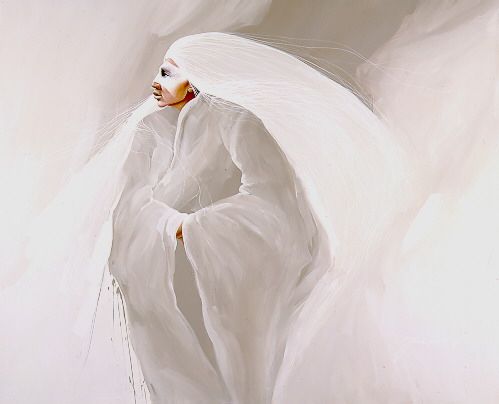
Among other tributes to the fallen warrior, Piestewa and five others are featured in "Voices," a new exhibit that opened at the Women's Memorial on May 26 to honor and highlight the contributions of Native American women who serve in the armed forces.
A Hopi Indian, Piestewa was given special honors by tribal representatives from across the country because she was the first service woman killed in action in Operation Iraqi Freedom and the first known Native American service woman known to have been killed in combat.
The 23-year-old soldier from Tuba City, Ariz., died from injuries when her unit, the 507th Maintenance Company, was ambushed on March 23 near Nasiriyah, Iraq, by enemy forces in Iraq. She was promoted posthumously.
To read more click here: http://www.pentagon.gov/specials/nativeam02/memorial.html
Monday, May 28, 2007


Native American Military Heroes
Many Native Americans have played a vital role in making America what it is today. For this reason, our country honors Native Americans during the month of November.
A presidential proclamation has set aside November as National American Indian Heritage Month every year since 1994.
Long before the first European settlers arrived, American Indians from numerous tribes throughout what is now known as North America inhabited the land. Free to practice their cultures and traditions, Native Americans lived off of the land and in harmony with nature. At that time, wildlife and enemy tribes posed the greatest dangers. However, the arrival of the first settlers brought a new danger.
As European settlements grew into colonies and colonies to states, many American Indians were forced west by Americans, and eventually onto reservations. Often they were stripped of their land, their culture, and individual ways of life as their new neighbors forbade them to practice their own form of government and religion.
Since European settlement, American Indians have distinguished themselves in numerous ways -- one of which is military service. In the 20th century, five American Indians have received the United States highest military honor: the Medal of Honor. Awarded for their military heroism above and beyond the call of duty, these warriors exhibited extraordinary bravery in the face of the enemy. They are; Jack C. Montgomery, a Cherokee from Oklahoma; Ernest Childers, a Creek from Oklahoma; Van Barfoot, a Chocktaw from Mississippi; Mitchel Red Cloud Jr., a Winnebago from Wisconsin; and Charles George, a Cherokee from North Carolina.
Want to know more? Click here: http://www.medalofhonor.com/NativeWarriors.htm
A presidential proclamation has set aside November as National American Indian Heritage Month every year since 1994.
Long before the first European settlers arrived, American Indians from numerous tribes throughout what is now known as North America inhabited the land. Free to practice their cultures and traditions, Native Americans lived off of the land and in harmony with nature. At that time, wildlife and enemy tribes posed the greatest dangers. However, the arrival of the first settlers brought a new danger.
As European settlements grew into colonies and colonies to states, many American Indians were forced west by Americans, and eventually onto reservations. Often they were stripped of their land, their culture, and individual ways of life as their new neighbors forbade them to practice their own form of government and religion.
Since European settlement, American Indians have distinguished themselves in numerous ways -- one of which is military service. In the 20th century, five American Indians have received the United States highest military honor: the Medal of Honor. Awarded for their military heroism above and beyond the call of duty, these warriors exhibited extraordinary bravery in the face of the enemy. They are; Jack C. Montgomery, a Cherokee from Oklahoma; Ernest Childers, a Creek from Oklahoma; Van Barfoot, a Chocktaw from Mississippi; Mitchel Red Cloud Jr., a Winnebago from Wisconsin; and Charles George, a Cherokee from North Carolina.
Want to know more? Click here: http://www.medalofhonor.com/NativeWarriors.htm
Sunday, May 27, 2007
Thirteen Moons
Charles Frazier’s Thirteen Moons is the story of one man’s remarkable life, spanning a century of relentless change. At the age of twelve, an orphan named Will Cooper is given a horse, a key, and a map and is sent on a journey through the wilderness to the edge of the Cherokee Nation, the uncharted white space on the map. Will is a bound boy, obliged to run a remote Indian trading post. As he fulfills his lonesome duty, Will finds a father in Bear, a Cherokee chief, and is adopted by him and his people, developing relationships that ultimately forge Will’s character. All the while, his love of Claire, the enigmatic and captivating charge of volatile and powerful Featherstone, will forever rule Will’s heart.
In a distinct voice filled with both humor and yearning, Will tells of a lifelong search for home, the hunger for fortune and adventure, the rebuilding of a trampled culture, and above all an enduring pursuit of passion. As he comes to realize, "When all else is lost and gone forever, there is yearning. One of the few welcome lessons age teaches is that only desire trumps time."
Will Cooper, in the hands of Charles Frazier, becomes a classic American soul: a man devoted to a place and its people, a woman, and a way of life, all of which are forever just beyond his reach. Thirteen Moons takes us from the uncharted wilderness of an unspoiled continent, across the South, up and down the Mississippi, and to the urban clamor of a raw Washington City. Throughout, Will is swept along as the wild beauty of the nineteenth century gives way to the telephones, automobiles, and encroaching railways of the twentieth. Steeped in history, rich in insight, and filled with moments of sudden beauty, Thirteen Moons is an unforgettable work of fiction by an American master.
In a distinct voice filled with both humor and yearning, Will tells of a lifelong search for home, the hunger for fortune and adventure, the rebuilding of a trampled culture, and above all an enduring pursuit of passion. As he comes to realize, "When all else is lost and gone forever, there is yearning. One of the few welcome lessons age teaches is that only desire trumps time."
Will Cooper, in the hands of Charles Frazier, becomes a classic American soul: a man devoted to a place and its people, a woman, and a way of life, all of which are forever just beyond his reach. Thirteen Moons takes us from the uncharted wilderness of an unspoiled continent, across the South, up and down the Mississippi, and to the urban clamor of a raw Washington City. Throughout, Will is swept along as the wild beauty of the nineteenth century gives way to the telephones, automobiles, and encroaching railways of the twentieth. Steeped in history, rich in insight, and filled with moments of sudden beauty, Thirteen Moons is an unforgettable work of fiction by an American master.
Quotes
"We did not think of the great open plains, the beautiful rolling hills, and winding streams with tangled growth as "wild". To us it was tame. Earth was bountiful and we were surrounded with the blessings of the Great Mystery." -
Luther Standing Bear - Rosebud Sioux
Luther Standing Bear - Rosebud Sioux
United South and Eastern Tribes appoints new executive director
NASHVILLE, Tenn. - For years before Mike Cook became executive director of United South and Eastern Tribes, he dreamed about landing this job.
Cook, a member of the St. Regis Mohawk Tribe at Akwesasne, N.Y., is in the process of moving his wife and their two youngest children to Nashville, where he recently started his appointment as executive director of USET, one of the largest nonprofit, intertribal organizations in the country, representing 24 federally acknowledged tribes in both regional and national arenas.
''It's very humbling. This is a dream position of mine that I'd been looking at for a long time. I see this as doing something I've really wanted to do for Indian country,'' Cook told Indian Country Today.
Cook has been involved with USET since the 1980s while working for the St. Regis Mohawk. At that time, a member of Cook's tribe was elected president of the organization and participated directly in USET meetings and other activities.
Want to know more? Click here: http://www.indiancountry.com/content.cfm?id=1096415053
Cook, a member of the St. Regis Mohawk Tribe at Akwesasne, N.Y., is in the process of moving his wife and their two youngest children to Nashville, where he recently started his appointment as executive director of USET, one of the largest nonprofit, intertribal organizations in the country, representing 24 federally acknowledged tribes in both regional and national arenas.
''It's very humbling. This is a dream position of mine that I'd been looking at for a long time. I see this as doing something I've really wanted to do for Indian country,'' Cook told Indian Country Today.
Cook has been involved with USET since the 1980s while working for the St. Regis Mohawk. At that time, a member of Cook's tribe was elected president of the organization and participated directly in USET meetings and other activities.
Want to know more? Click here: http://www.indiancountry.com/content.cfm?id=1096415053
Tribe considers vote on amendment
Published May 24, 2007 11:58 pm - Muskogee Phoenix
The Cherokee Nation has scheduled a special council meeting for 5 p.m. June 6 superseding and replacing the previously called meeting of June 5.
The council will consider and act upon a proposed resolution “authorizing the submission to a vote of the people an affirmation of the removal of federal approval for the Cherokee Nation Constitution or Amendments to the Constitution.”
The amendment passed in the last election, but the freedmen could not vote in that election, said council attorney Todd Hembree.
The tribal attorney general and the administration have indicated to Hembree they believe Carl J. Artman, assistant secretary of Indian Affairs, will sign off on the amendment if the freedmen have an opportunity to vote on it in the June 23 tribal election.
The Cherokee Nation has scheduled a special council meeting for 5 p.m. June 6 superseding and replacing the previously called meeting of June 5.
The council will consider and act upon a proposed resolution “authorizing the submission to a vote of the people an affirmation of the removal of federal approval for the Cherokee Nation Constitution or Amendments to the Constitution.”
The amendment passed in the last election, but the freedmen could not vote in that election, said council attorney Todd Hembree.
The tribal attorney general and the administration have indicated to Hembree they believe Carl J. Artman, assistant secretary of Indian Affairs, will sign off on the amendment if the freedmen have an opportunity to vote on it in the June 23 tribal election.
Chippewa Cree ink Medicaid pact
Gov. Brian Schweitzer signed an agreement with the Chippewa Cree Tribe on Thursday that will allow a local official on the Rocky Boy's Indian Reservation to determine if tribal members are eligible to get Medicaid.
It's the first such agreement signed in Montana and one of the first in the nation involving Medicaid, the federal program that provides medical assistance for low-income people.
Both state and tribal officials say the change will make it more comfortable for low-income tribal members to seek benefits to which they're entitled.
"Tribal people often don't know how to jump through the bureaucratic hoops, yet being denied access to Medicaid can be disastrous to them and their families," said Jonathan Windy Boy, a state legislator and member of the Chippewa Cree Tribal Business Council, before the ceremony. "We want to simplify the process and make it more user friendly by having our tribal members deal with somebody they know, not strangers."
Click here to read more: http://www.greatfallstribune.com/apps/pbcs.dll/article?AID=/20070525/NEWS01/705250304
It's the first such agreement signed in Montana and one of the first in the nation involving Medicaid, the federal program that provides medical assistance for low-income people.
Both state and tribal officials say the change will make it more comfortable for low-income tribal members to seek benefits to which they're entitled.
"Tribal people often don't know how to jump through the bureaucratic hoops, yet being denied access to Medicaid can be disastrous to them and their families," said Jonathan Windy Boy, a state legislator and member of the Chippewa Cree Tribal Business Council, before the ceremony. "We want to simplify the process and make it more user friendly by having our tribal members deal with somebody they know, not strangers."
Click here to read more: http://www.greatfallstribune.com/apps/pbcs.dll/article?AID=/20070525/NEWS01/705250304
Subscribe to:
Posts (Atom)


