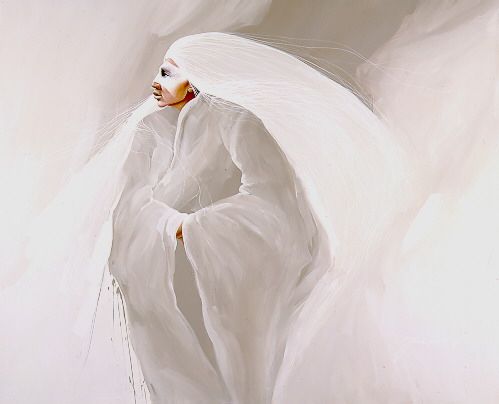
"Out of the Indian approach to life there came a great freedom, an intense and absorbing respect for life, enriching faith in a Supreme Power, and principles of truth, honesty, generosity, equity, and brotherhood as a guide to mundane relations." -
Luther Standing Bear - Oglala Sioux
Tuesday, July 17, 2007


Lummi to host historic meeting of the nations
by: Redwing Cloud
Proposed 'Treaty of Indigenous Nations' on the agenda
BELLINGHAM, Wash. - The Lummi Indian Nation has volunteered to host a historic meeting July 31 - Aug 2 between U.S. tribes and the First Nations of Canada to discuss the merits of a proposed ''Treaty of Indigenous Nations'' agreement.
''The purpose of the treaty is to create the foundation for an international political and economic alliance for trade relations to address the impacts of climate change, protect cultural properties, and to assert traditional rights to cross international borders,'' said Alan Parker, professor at Evergreen State College and co-chair of the National Congress of American Indians' Special Committee on Indigenous Nations Relationships.
The Special Committee met with the New Zealand Ngati Awa tribes of Aotearoa and First Nations in 2004, 2005 and 2006 to develop the draft treaty.
''The proposed treaty represents three years of consultation and deliberations. We believe that we have distilled the ideas and analysis of some of the best thinkers in the indigenous world in developing the proposal,'' Parker said.
Parker said he feels the primary objective behind the treaty is for indigenous nations to exercise their inherent right to govern themselves, given to them by the Creator and not from a colonial government.
Want to know more? Click here: http://www.indiancountry.com/content.cfm?id=1096415390
Proposed 'Treaty of Indigenous Nations' on the agenda
BELLINGHAM, Wash. - The Lummi Indian Nation has volunteered to host a historic meeting July 31 - Aug 2 between U.S. tribes and the First Nations of Canada to discuss the merits of a proposed ''Treaty of Indigenous Nations'' agreement.
''The purpose of the treaty is to create the foundation for an international political and economic alliance for trade relations to address the impacts of climate change, protect cultural properties, and to assert traditional rights to cross international borders,'' said Alan Parker, professor at Evergreen State College and co-chair of the National Congress of American Indians' Special Committee on Indigenous Nations Relationships.
The Special Committee met with the New Zealand Ngati Awa tribes of Aotearoa and First Nations in 2004, 2005 and 2006 to develop the draft treaty.
''The proposed treaty represents three years of consultation and deliberations. We believe that we have distilled the ideas and analysis of some of the best thinkers in the indigenous world in developing the proposal,'' Parker said.
Parker said he feels the primary objective behind the treaty is for indigenous nations to exercise their inherent right to govern themselves, given to them by the Creator and not from a colonial government.
Want to know more? Click here: http://www.indiancountry.com/content.cfm?id=1096415390
Cochegan Rock, The Mohegans' Giant Boulder
By Carol W. Kimball
Cochegan Rock is in the news again. (The Day, July 2, 2007. “Mohegans get back sacred rock linked to Uncas.) Said to be the largest free-standing boulder in New England, or perhaps the whole country, it has recently been transferred from the Boy Scouts of America's East Hartford-based Connecticut Rivers Council to the Mohegan Tribe.
My father used to talk about Cochegan Rock when I was growing up in Quaker Hill. He used to go there, hiking in from Raymond Hill in Montville, but it was too far for one of our Sunday walks. I heard a lot about the place, but I didn't get to see it until one bright day in June 1986 when my friend Bill Linke, a fine botanist, volunteered to show me the way. Now it is accessible from the Connecticut Turnpike, Interstate 395, from behind the Mobil gas station parking lot, but it is well hidden in the woods. However, there is a wide trail well maintained by the Scouts to guide you there. We crossed the rustic bridge over the placid stream and walked up the wooded hillside.
Cochegan Rock has been one of Montville's claims to fame. In the 1920's a tobacco advertising card used it for their promotion of Connecticut Nugget tobacco, although they spelled it “Cacheecan.” They boasted that it was the largest boulder in the world. On this card the weight was listed as 10,000 tons.
Three centuries ago the rock stood in the middle of Joshua Baker Jr.'s hillside pasture on land granted to his father by a deed signed by Mohegan sachem Owaneco, the son of Uncas, in 1700. According to tradition, Uncas held his council meetings there and used the site for a lookout. It is named for Cauchegan, the Indian who lived in that vicinity when the first English settlers came. One Caleb Cauchegan, probably a descendant, signed a petition a century later in 1749 in the days of Samson Occum.
Read more here: http://www.theday.com/re.aspx?re=3008f6f5-d11d-4571-80de-d3d5a61ab6bd
Cochegan Rock is in the news again. (The Day, July 2, 2007. “Mohegans get back sacred rock linked to Uncas.) Said to be the largest free-standing boulder in New England, or perhaps the whole country, it has recently been transferred from the Boy Scouts of America's East Hartford-based Connecticut Rivers Council to the Mohegan Tribe.
My father used to talk about Cochegan Rock when I was growing up in Quaker Hill. He used to go there, hiking in from Raymond Hill in Montville, but it was too far for one of our Sunday walks. I heard a lot about the place, but I didn't get to see it until one bright day in June 1986 when my friend Bill Linke, a fine botanist, volunteered to show me the way. Now it is accessible from the Connecticut Turnpike, Interstate 395, from behind the Mobil gas station parking lot, but it is well hidden in the woods. However, there is a wide trail well maintained by the Scouts to guide you there. We crossed the rustic bridge over the placid stream and walked up the wooded hillside.
Cochegan Rock has been one of Montville's claims to fame. In the 1920's a tobacco advertising card used it for their promotion of Connecticut Nugget tobacco, although they spelled it “Cacheecan.” They boasted that it was the largest boulder in the world. On this card the weight was listed as 10,000 tons.
Three centuries ago the rock stood in the middle of Joshua Baker Jr.'s hillside pasture on land granted to his father by a deed signed by Mohegan sachem Owaneco, the son of Uncas, in 1700. According to tradition, Uncas held his council meetings there and used the site for a lookout. It is named for Cauchegan, the Indian who lived in that vicinity when the first English settlers came. One Caleb Cauchegan, probably a descendant, signed a petition a century later in 1749 in the days of Samson Occum.
Read more here: http://www.theday.com/re.aspx?re=3008f6f5-d11d-4571-80de-d3d5a61ab6bd
Thursday, July 12, 2007
Featured Artist - Buffy Sainte-Marie
Born on a Cree reservation in Qu'Appelle Valley, Saskatchewan, Buffy Sainte-Marie was adopted and raised in Maine and Massachusetts. She received a Ph.D. in Fine Art from the University of Massachusetts. She also holds degrees in both Oriental Philosophy and teaching, influences which form the backbone of her music, visual art and social activism.
As a college student in the early 1960s, Buffy Sainte-Marie became known as a writer of protest songs and love songs. Many of these became huge hits and classics of the era, performed by hundreds of other artists including Barbra Streisand, Elvis Presley, Chet Atkins, Janis Joplin, Roberta Flack, Neil Diamond, Tracy Chapman and The Boston Pops Orchestra.
Buffy Sainte-Marie was a graduating college senior in 1962 and hit the ground running in the early the Sixties, after the beatniks and before the hippies. All alone she toured North America's colleges, reservations and concert halls, meeting both huge acclaim and huge misperception from audiences and record companies who expected Pocahontas in fringes, and instead were both entertained and educated with their initial dose of Native American reality in the first person.
By age 24, Buffy Sainte-Marie had appeared all over Europe, Canada, Australia and Asia, receiving honors, medals and awards which continue to this day. Her song "Until It's Time for You to Go" was recorded by Elvis and Barbra and Cher, and her "Universal Soldier" became the anthem of the peace movement. For her very first album she was voted Billboard's Best New Artist.
Check out this website: http://www.creative-native.com/
As a college student in the early 1960s, Buffy Sainte-Marie became known as a writer of protest songs and love songs. Many of these became huge hits and classics of the era, performed by hundreds of other artists including Barbra Streisand, Elvis Presley, Chet Atkins, Janis Joplin, Roberta Flack, Neil Diamond, Tracy Chapman and The Boston Pops Orchestra.
Buffy Sainte-Marie was a graduating college senior in 1962 and hit the ground running in the early the Sixties, after the beatniks and before the hippies. All alone she toured North America's colleges, reservations and concert halls, meeting both huge acclaim and huge misperception from audiences and record companies who expected Pocahontas in fringes, and instead were both entertained and educated with their initial dose of Native American reality in the first person.
By age 24, Buffy Sainte-Marie had appeared all over Europe, Canada, Australia and Asia, receiving honors, medals and awards which continue to this day. Her song "Until It's Time for You to Go" was recorded by Elvis and Barbra and Cher, and her "Universal Soldier" became the anthem of the peace movement. For her very first album she was voted Billboard's Best New Artist.
Check out this website: http://www.creative-native.com/
'Catching the Dreams of our Ancestors'
SAN JUAN ISLAND, Wash. - Kurt Russo said a Lummi man once told him he shook the hand of a man who shook the hand of a man who signed the Point Elliott Treaty on Jan. 22, 1855.
Like other First Peoples, the Lummi have a generational view of time. In other words, 1855 was not 152 years ago - it was only two handshakes ago.
Likewise for the Lummi presence on the San Juan Islands. Only two handshakes ago, the Lummi occupied at least 10 villages in the San Juans, including P'kweekh-eel-wuhlh on San Juan Island, believed to be the original home of the Lummi and the Songish through Sweh-tuhn, the first man.
Archaeological evidence at some of those village sites show occupation dating 5,000 years; a few artifacts, from a collection of more than 1 million pieces, are housed in a permanent exhibit at the National Park Service's American Camp visitor center.
Bill James, retired coordinator of the Lummi language program at Northwest Indian College, said in a 2005 interview that the Lummi were forced off the islands because of smallpox, treaties and the move to reservations.
There's more here: http://www.indiancountry.com/content.cfm?id=1096415341
Like other First Peoples, the Lummi have a generational view of time. In other words, 1855 was not 152 years ago - it was only two handshakes ago.
Likewise for the Lummi presence on the San Juan Islands. Only two handshakes ago, the Lummi occupied at least 10 villages in the San Juans, including P'kweekh-eel-wuhlh on San Juan Island, believed to be the original home of the Lummi and the Songish through Sweh-tuhn, the first man.
Archaeological evidence at some of those village sites show occupation dating 5,000 years; a few artifacts, from a collection of more than 1 million pieces, are housed in a permanent exhibit at the National Park Service's American Camp visitor center.
Bill James, retired coordinator of the Lummi language program at Northwest Indian College, said in a 2005 interview that the Lummi were forced off the islands because of smallpox, treaties and the move to reservations.
There's more here: http://www.indiancountry.com/content.cfm?id=1096415341
Tribe works to save ancestral land from fire
By: Sheila Gardner
To the casual observer, the broad flat rock covered with red slurry looks like just another piece of evidence of the efforts to extinguish the Angora fire.
Closer examination shows indentations in the rock revealing it is a grinding stone from the prehistory of the Washoe tribe's aboriginal homeland at Lake Tahoe.
This is the kind of cultural damage assessment in which Washoe tribe environmentalist Darrel Cruz specializes.
With more than 25 years experience fighting wildland fires and his training as an environmental specialist, Cruz, 47, is one of the few people in the United States who can be in front of firefighters' bulldozers as they race to build a suppression line around a raging wildfire.
His work is critical to protect archeological sites. When the devastating Angora fire broke out June 24, Cruz reported to the site.
"Within a few days of the fire, I went up as a resource adviser to protect the archeological monitoring. I was looking for any disturbance of the sites during the (fire) line construction," Cruz said.Cruz found two sites which needed attention.
Read more here: http://www.nevadaappeal.com/article/TD/20070711/NEWS/107110041/-1/REGION
To the casual observer, the broad flat rock covered with red slurry looks like just another piece of evidence of the efforts to extinguish the Angora fire.
Closer examination shows indentations in the rock revealing it is a grinding stone from the prehistory of the Washoe tribe's aboriginal homeland at Lake Tahoe.
This is the kind of cultural damage assessment in which Washoe tribe environmentalist Darrel Cruz specializes.
With more than 25 years experience fighting wildland fires and his training as an environmental specialist, Cruz, 47, is one of the few people in the United States who can be in front of firefighters' bulldozers as they race to build a suppression line around a raging wildfire.
His work is critical to protect archeological sites. When the devastating Angora fire broke out June 24, Cruz reported to the site.
"Within a few days of the fire, I went up as a resource adviser to protect the archeological monitoring. I was looking for any disturbance of the sites during the (fire) line construction," Cruz said.Cruz found two sites which needed attention.
Read more here: http://www.nevadaappeal.com/article/TD/20070711/NEWS/107110041/-1/REGION
Let Cherokees decide who's Cherokee
By Heather Williams - Cherokee citizen and Indian freedmen descendant
Opinion -
I'M PROUD TO BE a Cherokee citizen who is also descended from black slaves, and the Cherokee Nation I know is one of the most diverse, welcoming societies on Earth. Yet today, my tribe stands accused of racism and is the target of legislation introduced by Rep. Diane Watson (D-Los Angeles) aimed at cutting off our federal funding because we amended our tribal constitution to affirm that, in order to be a citizen of the Cherokee Nation, you must prove by-blood descent from Cherokee Indians.
Can a tribe be both inclusive and have a by-blood requirement? My experience proves that it can, and I believe that Indians deserve the right to preserve our heritage through a direct connection to our ancestors.
The constitutional amendment is a recent chapter of a long history. In 1906, a census called the Dawes Roll was created, listing by-blood Indians along with non-Indian residents of Cherokee Territory. Some of those residents were former Cherokee slaves or their descendants, known as freedmen, and an 1866 treaty with the U.S. government called for them to have "rights of native Cherokees." Watson refers to that treaty as the basis for her contention that all freedmen should be tribal members.
But of course that treaty was controversial. It came after the infamous Trail of Tears and at the end of the Civil War, which ushered in half a century of fierce U.S. government efforts to destroy Cherokee (and other tribes') sovereignty and land claims. Ultimately, the only "rights of native Cherokees" left to speak of were the right of individuals to a private land allotment and a cash payment from the U.S. government — which non-Indian freedmen and Cherokees alike received when the U.S. dissolved our territory and made Oklahoma a state.
Then, for a long time, there was no functioning Cherokee government. It wasn't until 1975 that Cherokees were able to revitalize their nation and lay claim to self-governance. The Cherokee constitution was written then, and its intent was that Cherokee citizens should be Indians who could trace their lineage to at least one by-blood Indian listed on the Dawes Roll.
Read the full piece here: http://www.latimes.com/news/opinion/commentary/la-oe-williams10jul10,0,3074789.story
Opinion -
I'M PROUD TO BE a Cherokee citizen who is also descended from black slaves, and the Cherokee Nation I know is one of the most diverse, welcoming societies on Earth. Yet today, my tribe stands accused of racism and is the target of legislation introduced by Rep. Diane Watson (D-Los Angeles) aimed at cutting off our federal funding because we amended our tribal constitution to affirm that, in order to be a citizen of the Cherokee Nation, you must prove by-blood descent from Cherokee Indians.
Can a tribe be both inclusive and have a by-blood requirement? My experience proves that it can, and I believe that Indians deserve the right to preserve our heritage through a direct connection to our ancestors.
The constitutional amendment is a recent chapter of a long history. In 1906, a census called the Dawes Roll was created, listing by-blood Indians along with non-Indian residents of Cherokee Territory. Some of those residents were former Cherokee slaves or their descendants, known as freedmen, and an 1866 treaty with the U.S. government called for them to have "rights of native Cherokees." Watson refers to that treaty as the basis for her contention that all freedmen should be tribal members.
But of course that treaty was controversial. It came after the infamous Trail of Tears and at the end of the Civil War, which ushered in half a century of fierce U.S. government efforts to destroy Cherokee (and other tribes') sovereignty and land claims. Ultimately, the only "rights of native Cherokees" left to speak of were the right of individuals to a private land allotment and a cash payment from the U.S. government — which non-Indian freedmen and Cherokees alike received when the U.S. dissolved our territory and made Oklahoma a state.
Then, for a long time, there was no functioning Cherokee government. It wasn't until 1975 that Cherokees were able to revitalize their nation and lay claim to self-governance. The Cherokee constitution was written then, and its intent was that Cherokee citizens should be Indians who could trace their lineage to at least one by-blood Indian listed on the Dawes Roll.
Read the full piece here: http://www.latimes.com/news/opinion/commentary/la-oe-williams10jul10,0,3074789.story
Subscribe to:
Posts (Atom)


