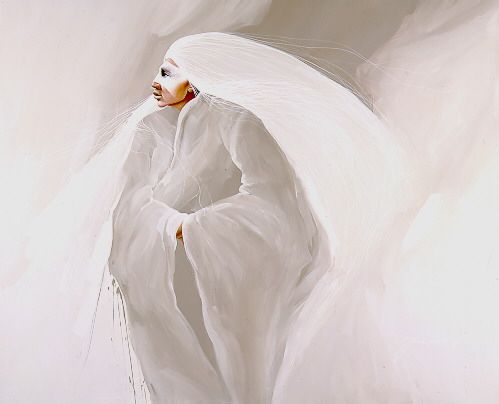
Frank C. Dukepoo is a full-blooded American Indian of Hopi and Laguna heritage. Born on the Mohave Indian reservation, in Arizona, he received his early education in the Phoenix area, In 1973 he graduated from Arizona State University with a Ph.D. in zoology (genetics). He, is the first Hopi to have earned a doctorate and one of six Indians nationally who hold earned doctorates in the sciences. He is one of only two Native American geneticists in the country.
His background includes teaching at San Diego State University, administrative executive positions with the National Science Foundation and the National Institutes of Health, Washington, D.C. He is the former Director of Indian Education at Northern Arizona University (NAU), Flagstaff. Presently, he is a faculty member in the Department of Biological Sciences and Special Assistant to the Academic Vice President at NAU.
For the past I 0 years he has expanded his interest in the area of retention and motivation. In recent years he has gained considerable reputation as one of the country's outstanding motivators of Indian students. He is the former Director of a NSF-supported science program that has gained national recognition for 100% retention of Indian students. Dr. Dukepoo is the founder, incorporator and Director of the National Native American Honor Society. This nationally-recognized exemplary program includes about 2,000 straight-A Native American students representing some 190 schools in the continental United States, Alaska and Canada.
In addition to retention and motivation studies, his other research interests include the study of birth defects in Southwest Native Americans and, albinism and inbreeding among the Hopi Indians of Northern Arizona. He is attempting to map the albino gene and has made two films pertaining to his research. The Whizkids production has received the ABC Excellence Award in Children's Programing, Telly Award and the School Library Journal Award. In 1995, the production was accepted for airing by the Minnesota Public Television. He has been featured on radio talk shows pertaining to motivation of Indian youth and ethics in human genomic research in Indian communities. Currently he is developing culturally-relevant science material, science modules and science kits for elementary students. As an amateur magician he gives "Mind, Magic and Motivation" shows to Indian youth.
As a professional, he is a member of numerous scientific and educational societies and organizations and is a founding member of SACNAS (Society for the Advance of Chicanos and Native Americans in Science and AISES (American Indian Science and Engineering Society). He also serves as a consultant to the Bureau of Indian Affairs, Department of Education, National Institutes of Health, National Science Foundation, Southwest Development Laboratory and the Far West Laboratory. He also provides training and gives in-service to teachers, numerous Indian tribes and the Department of Economic Security (Child Protective Services).
His numerous awards include the John Hay Whitney Fellowship, Ford Foundation Fellowship, listing in Who's Who of American Indians, Bo Jack Humanitarian Award, Iron Eyes Cody Medal of Freedom Award, Outstanding Educator of The Year Award (National Coalition of Indian Education) and "Premier" status and "Exemplary" Awards for programs he devised and directed in working with American Indian youth. In 1995 he was named "Indian Man of the Year," inducted into the "Indian Hall of Fame," listed in "Past and Present Indian Leaders" and selected for inclusion in "Bibliographies of Outstanding Native Americans." In 1996 he was named "Hopi Of The Year" and received the "Lifetime Achievement Award" for service to Indian people.
He's also listed in 100 Native Americans Who Shaped American History.
Sunday, October 21, 2007


Cocopahs to celebrate heritage of tribe, neighbors
By: Darin Fenger
A huge public feast followed by traditional dancing and singing will mark the 11th Annual Cocopah Cultural Celebration, a time when the tribe shares its own culture and celebrates the cultures of neighbors and friends. The event runs from 11:30 a.m. to 4 p.m. Saturday at Cocopah Reservation West, located northwest of Somerton.
The Cocopah Indian Tribe began holding its annual celebration in 1996, when the tribe was then celebrating the opening of its museum, which will be open for tours Saturday.
"The Cocopah Museum and the Elders Cultural Council members established this day to recognize, respect and enjoy the tribe's cultural identity and history," said Liz Pratt, spokeswoman for the tribe. "This celebration is an opportunity for the tribe to share its culture through music and dance, celebrating with surrounding, neighboring communities."
But the tribe doesn't stop at celebrating Cocopah culture. The tribe also invites artists and performers from other cultures to participate in the event. This year the lineup of entertainment will include performers from other tribes, as well as a Hawaiian dance group called Hui O'hawai'i of Yuma.
"The tribe sees this day as a chance to recognize and respect all cultures," Pratt said.
Want to know more about the Cocopah museum? Check out this website: http://www.itcaonline.com/tribes_cocopah.html
A real honor: Collaborating with tribes on name changes
Editorial Indian Country Today
Confronting problems together is so often declared an American value that one is tempted to believe it is true. In fact, it is completely characteristic of American democracy that any issue is open to dialogue, delay and disagreement. The perpetual debate regarding place names and mascots considered offensive by Native peoples offers many examples of both successful collaboration and doomed obstinacy. As with most conflict, genuine compassion and educated decisions are critical to reaching a resolution.
In the midst of a Major League Baseball playoff series between the Boston Red Sox and the Cleveland Indians, caricatures of Indian faces and accoutrements flooded stadium seats and television sets. There are wide-ranging opinions from Native and non-Native people on the effect and gravity of Indians as sports mascots. But there is no question that allowing the practice to continue makes it possible for individuals (and groups) to freely mock Indian songs, dances, traditional dress and languages. ''It's Tribe time now,'' reads the Cleveland Indians' rally towel. ''Go Tribe'' and ''Indians win!'' are common sentiments. But only, it seems, inside the ballpark. Imagine such passionate, public outcries by non-Natives in support of tribal sovereignty or other important issues. There is no honor in paternalism, and ironic cheers for Indian mascots turn fun sporting events into virulent arenas for racism and ignorance.
Native peoples scored a moral victory four years ago when the Arizona State Board on Geographic and Historic Names approved the renaming of Squaw Peak in Phoenix to Piestewa Peak. The new name honors the heroic service of U.S. Army Pfc. Lori Piestewa, who is believed to be the first American Indian woman killed in combat on foreign soil and the first U.S. female soldier killed in the Iraq war. Though the road was fraught with controversy, the strong leadership of Arizona Gov. Janet Napolitano, long an ally of Indian tribes in the state, made all the difference and the name change was made well within Arizona's standard five-year waiting period. Piestewa Peak is now a monument to the courage and pride of the young Hopi soldier, mother of two children, who made the ultimate sacrifice for her nation and country. It is a victory not only for Native Americans who share and admire Piestewa's traditional values, but for all Americans who believe in duty, honor and sacrifice.
Read more here: http://www.indiancountry.com/content.cfm?id=1096415957
Friday, October 19, 2007
Students embrace Indian culture
By: Barbara Arrigoni
ORLAND — For the first time ever, students at Fairview School in Orland didn't get to celebrate the school's annual Indian Day at Black Butte Lake.
Each year, fourth-grade classes go to the lake for hands-on sessions to learn about the culture of two Northern California tribes — the Wintun of Colusa and Nomolaki of Paskenta. With rain threatened, the event was held on school grounds Thursday. It's part of the school's California History studies.
If the kids cared about not going to the countryside, it didn't show during the morning activities.
Seven classes participated in the event, each divided into two groups and then smaller ones, rotating through six stations.
The children learned several cultural traditions. Outside near the school's garden, groups built a shelter of poles and branches and practiced the art of spearing. Vine wreaths substituted for live animals for the latter activity. Laughter rang across the field with each thrust.
Inside several classrooms, students had their faces painted, made shell necklaces, learned a "friendship" dance, listened to storytellers repeat legends, and used handmade drills, which looked similar to old-fashioned spinning tops.
There's more here: http://www.chicoer.com/news/ci_7221520
Indian land ruling appealed to high court
By: Katie Mulvaney
The state made another play yesterday to keep its hold over 31 acres owned by the Narragansett Indian Tribe in Charlestown.
Attorney General Patrick C. Lynch’s office, joined by Governor Carcieri and the Town of Charlestown, filed an appeal asking the U.S. Supreme Court to consider, and overturn, a ruling that allows the U.S. Department of Interior to hold the land in trust for the tribe.
Trust status would free the property from state and local tax and land-use regulations or most Rhode Island criminal laws.
Tribal leaders have said they will use the site for housing, but state officials fear the ruling would clear the way for the tribe to open a smoke shop, casino or other venture, outside state oversight.
Read more here: http://www.projo.com/news/content/Tribe_Appeal_10-19-07_H37HMUE.3f0cc6.html
Indian Tribe OKs Deal With Michigan
Associated Press
TRAVERSE CITY, Mich. (AP) — The Sault Ste. Marie Tribe of Chippewa Indians said Thursday that its members have approved an agreement between five American Indian tribes and the state of Michigan over inland hunting and fishing rights.
The tribal board still needs to approve the pact, which it is expected to do during a meeting Sunday, spokesman Corey Wilson said.
The other four tribes have ratified the deal, which recognizes members' rights to hunt, fish and gather plants in parts of western and northern Michigan covered by an 1836 treaty. The area includes about 37 percent of the state. Fishing in the Great Lakes is excluded because it was dealt with in earlier agreements.
The agreement, already endorsed by state and federal officials, also needs the approval of a federal judge who had scheduled a hearing for Monday, but canceled it in an order noting the successful outcome of the Sault Ste. Marie referendum.
The Sault tribe was the only tribe that submitted the tentative agreement, announced last month, to its full membership for a referendum.
In results posted on its Web site Thursday, the tribe said 3,476 voters favored the pact while 678 opposed it. Nearly 33 percent of the 12,734 members voted.
The proposal affects much of the western and northern Lower Peninsula and the eastern Upper Peninsula.
It empowers the tribes to issue their own hunting and fishing licenses and write their own regulations. Three already have rules and the other two will be developing them.
Many of the regulations will parallel state policies for protecting resources from overharvesting and abuse, limiting size, numbers and species taken. But the tribes will have longer deer hunting seasons and different policies on fishing methods such as spearing and netting.
The DNR is hosting a series of public meetings around the state to explain the agreement.
The other participating tribes include the Bay Mills Indian Community; the Little Traverse Bay Bands of Odawa Indians; the Grand Traverse Band of Ottawa and Chippewa Indians; and the Little River Band of Ottawa Indians.
American Indians Seek Greater Understanding, Recognition
By: Jeffrey Thomas
Washington -- “Maybe you should just tell them that we still exist,” an American Indian told the moderator of a focus group during a recent study that not only has highlighted continuing misconceptions about American Indians, but also has revealed the sympathy with which many Americans view Indians’ history and desire to learn more about their past and present.
“Tell the story of American Indians truthfully and honestly [in an Indian museum],” a non-Indian proposed, “and tell that story in both the historical and contemporary concepts. ... They survived everything that happened to them -- they survived.”
The study revealed that, even though American Indians might feel isolated, misunderstood and culturally threatened in contemporary America, they often express pride in their economic accomplishments and a conviction that their lives are improving. “The biggest fight that we have is [about] identity,” a New York Indian told researchers.
The study Walking a Mile: A First Step Toward Mutual Understanding is based on 12 focus groups -- seven with Indians and five with non-Indians -- conducted by researchers from the nonpartisan public opinion research organization Public Agenda. Such focus groups provide qualitative information on how the participants view the place of American Indians in the United States today, but more opinion research and polling is needed to reveal how widely held those views are, according to experts.
“This was exploratory research ... designed to pose as many questions as it answered,” Public Agenda’s Michael Remaley told USINFO. “Clearly, there is much more to be done to further the conversation nationally.”
Read this very interesting story here: http://usinfo.state.gov/xarchives/display.html?p=washfile-english&y=2007&m=October&x=200710181452191CJsamohT0.7733576
Subscribe to:
Posts (Atom)


