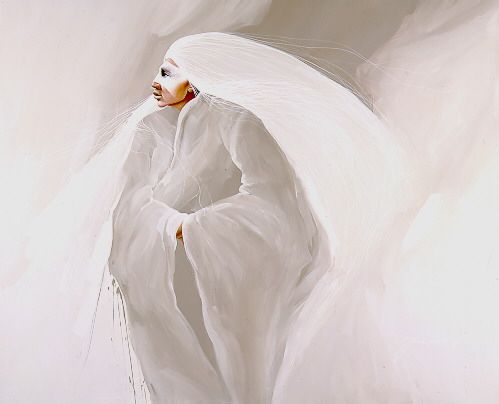
Simon Ortiz is a contemporary Native American writer who continues to be a strong voice in literature today. His many writing accomplishments include creating poems, short stories, essays, and children’s books.
Biographer A. Walton Litz recounts that as a child, Ortiz would listen closely to adults telling traditional stories and gossip and through this fascination with stories was given the nickname of “the reporter” by his father (American Writers, 500). This interest in culture and history fueled his passion for writing. Having grown up in the Acoma Pueblo community in Albuquerque, New Mexico, Ortiz experienced the hardships of Native American and English cultures colliding from a very early age.
According to biographer A. Walton Litz, “at most of the Bureau of Indian Affairs and mission schools, the children were punished by a sharp crack on the knuckles if they were caught speaking their native language” (American Writers, 501). As a result, he found literature to be a way to express his frustration and passionate beliefs. This medium provided a way to embrace his Acoma culture while sharing it with others.
According to an article by A. Walton Litz in the American Writers Supplement series, Ortiz is unlike most Native American contemporary writers in that he is full blooded Native American and his first language was his native tongue of Keresan (500). By learning English, he found a way to communicate with those outside of his immediate culture. His writing was first supported by teaching at several institutions such as the University of New Mexico and the University of Iowa. A. Walton Litz tells of how Ortiz entered writing in the 1960’s when equal rights and social justice were at the roots of everyday life (American Writers, 497). This timing proved fruitful because it provided a foundation of readers that wanted to “fix” our nation, both environmentally and socially.
Simon Ortiz’s writing is a success because it describes events in everyday life. Readers can relate to his works because they reveal that, by introspection and experiences, anyone can learn from past experiences and gain personal growth. He writes about everyday life and how our industrial culture has effected environment and society. These issues not only affect Native Americans, but all Americans, all people. Biographer Kathy Whitson suggests that “Ortiz has used the language of the colonizers to fight against oppression” (Native American Literature, 178). In this way, his works provide a reader with the sense of self-respect that they need in order to to stand up for their rights and preserve their way of life.
He's also listed in 100 Native Americans Who Shaped American History.
Check out this website to find some of his works as well as more information: http://www.uta.edu/english/tim/poetry/so/ortizmain.htm
Friday, November 9, 2007


First Native American inducted into Oklahoma Military Hall of Fame
Lawton_In the history of the Oklahoma Military Hall of Fame there have been no Native Americans on the list - until now. Master Gunnery Sergeant Vernon Tsoodle joins the elite list of honorees. 7News' own Neely Tsoodle talked with her uncle in a very special interview. The entire family is proud of Vernon's many accomplishments, both in his personal and military life. But no accomplishment is as special to Vernon as this award.
This honor recognizes his years fighting for his country while representing Oklahoma - "The Land of the Red Man" - and Native America. Vernon spent almost 25 years in the military as a Marine and remembers every conflict, situation, victory or defeat as if it happened yesterday.
He's seen his share of history. Like the Korean Conflict in November of 1950. His unit was outnumbered almost eight to one by Chinese forces and the Marines needed him to fight. They pulled him from his communications job and handed him a machine gun - he hadn't shot a weapon like that for years, but he did it, and he did it well. "A lot of Chinese came out with Purple Hearts," he joked.
It was a bloody battle with a lot of US casualties - the Battle of the Chosin Reservoir. It was cold with temperatures at 40 below and despite this, Vernon and his fellow Marines succeeded. If you see his wall full of medals you get a small idea of all that he has accomplished.
Read the full article here: http://www.kswo.com/Global/story.asp?S=7327643. There's a video too.
BIA decision supports Mohawks' claim against Harrah's
by: Gale Courey Toensing
AKWESASNE, N.Y. - The BIA has recognized the St. Regis Mohawk Tribe's existing governing body and its tribal court in a ruling that supports the tribe's $2.8 billion claim against Harrah's Entertainment Inc.
In an Oct. 31 decision, BIA Eastern Region Director Franklin Keel said the Indian agency affirmed the Mohawks' three-chief system as the tribe's representative body with which it will conduct government-to-government relations.
Additionally, Keel said that all of the agency's previous decisions invalidating the tribal court have been vacated by a federal court and ''as a matter of law are now no longer extant.''
This was the third time in 11 years that the BIA had ruled on the tribal governance issue.
The decision reiterates the authority of the tribal court's March 2001 default judgment against Harrah's for $1.8 billion in compensatory and punitive damages for unlawfully interfering in the tribe's efforts to establish a casino at Monticello Gaming and Raceway.
Want to know more? Click here: http://www.indiancountry.com/content.cfm?id=1096416089
Wednesday, November 7, 2007
Archaeologists in Puerto Rico surprised by discovery of Indian artifacts
Associated Press
SAN JUAN, Puerto Rico: U.S. and Puerto Rican archaeologists say they have uncovered what they believe to be one of the most important pre-Columbian sites found in the Caribbean, containing stones etched with ancient petroglyphs and graves that reveal unusual burial methods.
The stones at the site in southern Puerto Rico form a large plaza measuring some 130 feet by 160 feet (40 meters by 50 meters) that could have been used for ball games or ceremonial rites, said Aida Belen Rivera, director of the Puerto Rican Historic Conservation office.
The petroglyphs include the carving of a human figure with masculine features and frog legs. Archaeologists believe the site might belong to the Taino and pre-Taino cultures that inhabited the island before European colonization.
The plaza could contain other artifacts dating from 600 A.D. to 1500 A.D., said Rivera, whose office is receiving general reports about the findings.
"I have visited many sites and have never seen a plaza of that magnitude and of those dimensions and with such elaborate petroglyphs," said Miguel Rodriguez, member of the government's archaeological council and director of a graduate school in Puerto Rico that specializes in history and humanities. He is not involved in the project.
Want to know more? Click here: http://www.iht.com/articles/ap/2007/10/28/news/CB-GEN-Puerto-Rico-Archaeological-Find.php
Eagle War Feathers
Cheyenne legend...
A long, long time ago the Cheyenne warriors had not learned yet how to use eagle for their war ornaments. One of their men climbed a high mountain; there he lay for five days, crying, without food. Some powerful being, he hoped, would see him and come to him, to teach him something great for his people.
He was glad when he heard a voice say, "Try to be brave, no matter what comes, even if it might kill you. If you remember these words, you will bring great news to your people, and help them."
After a time he heard voices, and seven eagles came down, as if to fly away with him. But he was brave, as he had been told, though he continued to cry and keep his eyes closed. Now the great eagles surrounded him. One said "Look at me. I am powerful, and I have wonderfully strong feathers. I am greater than all other animals and birds in the world."
This powerful eagle showed the man his wings and his tail, and he spread all his feathers as wide as possible. He shows him how to make war headdresses and ornaments out of eagle feathers.
"Your people must use only eagle feathers, and it would be a great help to them in war and bring them victories," eagle said.
Since no loose feathers were about, the seven eagles shook themselves, and plenty of feathers fell to the ground. The Cheyenne picked them up and gratefully took them home to his tribe. On that day, eagle feathers were seen for the first time by the Cheyenne and they knew where they came from.
The man showed his people how to make war ornaments from the eagle feathers, as he had been told. From that day onward, the man became a great warrior in his tribe, and their leader in war parties.
He became so successful his people named him Chief Eagle Feather and he wore his Eagle Feather Warbonnet, as he led the Cheyennes with dignity and pride.
Quotes
"I like living in this community, and I like being Choctaw, but that's all there is to it. Just because I don't want to be a white man doesn't mean I want to be some kind of mystical Indian either. Just a real human being." -
Beasley Denson, Secretary/Treasurer of the Choctaw Tribal Council, 1988
Beasley Denson, Secretary/Treasurer of the Choctaw Tribal Council, 1988
Penobscot Indian elder to receive France's highest honor for his service in World War II
By Aimee Dolloff
INDIAN ISLAND, Maine — The attention Monday from media and other Penobscot Nation members was almost more than World War II veteran Charles Shay could handle.
"I’ll be glad when all this is over," he said modestly while waiting in his living room on Indian Island for the arrival of Francois Gauthier, consul general of France in Boston.
Gauthier traveled to Maine on Monday to accompany Shay to Washington, D.C., where today he is to receive the Legion of Honor medal, France’s highest military and civil recognition.
"He’s a courageous soldier," Gauthier said of Shay. "Because he participated in liberating my country, we think we owe him a special recognition."
Founded by Napoleon Bonaparte in 1802, the National Order of the Legion of Honor is the highest civil and military honor in France. It is presented not only for military service, but also for eminent service in other fields such as science or culture, Gauthier explained. Recipients of the honor are named by decree signed by the president of the Republic of France. Shay will be given the title of knight of the Legion of Honor.
"It’s important to me because I’m trying to promote the history of my family, and I’m trying to bring attention to the Native American veterans that served," Shay said.
Read more here: http://bangornews.com/news/t/news.aspx?articleid=156221&zoneid=500
Subscribe to:
Posts (Atom)


