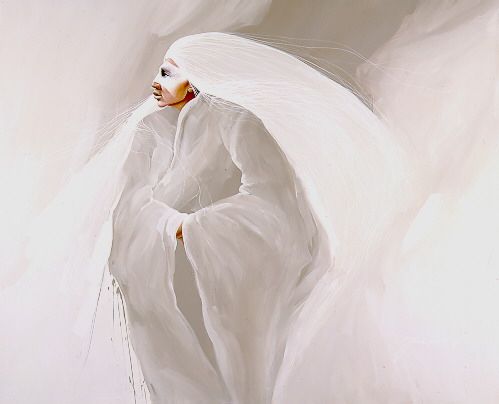
"They told us that Indian ways were bad; they said we must get civilized. I remember that word. It means "be like the white man." I am willing to be like the white man, but I did not believe Indian ways were wrong.
But they kept teaching...the books told how bad the Indians had been to the white man. We all wore white man's clothes and ate white man's food and went to white man's churches and spoke white man's talk.
And so after a while we also began to say Indians were bad. We laughed at our own people and their blankets and cooking pots." -
Sun Elk - Taos Pueblo
Thursday, June 14, 2007


Discovery of Indian remains shuts down project near Port Townsend
Associated Press - June 13, 2007 1:25 PM ET
PORT TOWNSEND, Wash. (AP) - The discovery of ancient Indian remains threatens another project on the Olympic Peninsula.
Construction of a $2.8 million septic system at Beckett Point near Point Townsend was halted by the Jefferson County Public Utility District after work on May 27nd turned up the remains.
The Jamestown S'Klallam tribe says Beckett Point is a former village site. The PUD says it lacks the money for an archaeological examination.
Members of the PUD, tribe and other concerned parties are meeting tomorrow to determine the next step.
Another such discovery at Port Angeles forced the Transportation Department to give up plans to build a drydock.
PORT TOWNSEND, Wash. (AP) - The discovery of ancient Indian remains threatens another project on the Olympic Peninsula.
Construction of a $2.8 million septic system at Beckett Point near Point Townsend was halted by the Jefferson County Public Utility District after work on May 27nd turned up the remains.
The Jamestown S'Klallam tribe says Beckett Point is a former village site. The PUD says it lacks the money for an archaeological examination.
Members of the PUD, tribe and other concerned parties are meeting tomorrow to determine the next step.
Another such discovery at Port Angeles forced the Transportation Department to give up plans to build a drydock.
Remember These Words
continued...
Don't let bad moments overcome you; be patient, and they will pass.
Don't hesitate to reach out for help; we all need it from time to time.
Don't run away from love but towards love, because it is our deepest joy.
to be continued...
Don't let bad moments overcome you; be patient, and they will pass.
Don't hesitate to reach out for help; we all need it from time to time.
Don't run away from love but towards love, because it is our deepest joy.
to be continued...
Tribe keeps name the same
By MARK RANZENBERGER
The Saginaw Chippewa Indian Tribe has gone back to calling itself the Saginaw Chippewa Indian Tribe.
The Tribe recently ended a brief experiment with calling itself the Saginaw Chippewa Tribal Nation, according to Chief Fred Cantu. "The (Tribal) Council felt that the Tribe, through its constitution, is named the Saginaw Chippewa Indian Tribe of Michigan," Cantu said, "and that's what we wanted to stick with."
The Tribe's official name, since its organization during the 1930s under the Indian Reorganization Act, always has been the Saginaw Chippewa Indian Tribe. But earlier this year, the Tribe began to identify itself as the Tribal Nation, dropping the words "Indian" and "of Michigan" and emphasizing the word "nation."
A public relations task force originally proposed the use of the term "Tribal Nation" as an alternative to the official name. Members said it emphasized the Tribe's inherent sovereignty, pride in nationhood, and the fact that the Tribe is separate from the state of Michigan.
Click here to read more: http://www.themorningsun.com/stories/061107/loc_tribe.shtml
The Saginaw Chippewa Indian Tribe has gone back to calling itself the Saginaw Chippewa Indian Tribe.
The Tribe recently ended a brief experiment with calling itself the Saginaw Chippewa Tribal Nation, according to Chief Fred Cantu. "The (Tribal) Council felt that the Tribe, through its constitution, is named the Saginaw Chippewa Indian Tribe of Michigan," Cantu said, "and that's what we wanted to stick with."
The Tribe's official name, since its organization during the 1930s under the Indian Reorganization Act, always has been the Saginaw Chippewa Indian Tribe. But earlier this year, the Tribe began to identify itself as the Tribal Nation, dropping the words "Indian" and "of Michigan" and emphasizing the word "nation."
A public relations task force originally proposed the use of the term "Tribal Nation" as an alternative to the official name. Members said it emphasized the Tribe's inherent sovereignty, pride in nationhood, and the fact that the Tribe is separate from the state of Michigan.
Click here to read more: http://www.themorningsun.com/stories/061107/loc_tribe.shtml
Wednesday, June 13, 2007
Harsh realities of reservation life
While many people are sympathetic to the needs and misfortunes of others, it is often hard to comprehend the extent of the difficulties some people on Indian reservations can face. For most people who live in the dominant culture, almost everyone has the potential to find a job and the money or the resources needed to clothe their children, feed their elders, and repair their homes. It is often almost beyond our ability to comprehend that these are privileges which can be so hard to come by for many people who live on remote Indian reservations. With unemployment on the reservations reaching as high as 85%, with 45% of the children living below the poverty level and with a life expectancy of only 45 years for Native people living on reservations, its clear to see that America is not always a place of liberty and justice for all.
While there are programs such as Habitat for Humanity and others, they can only build or repair a few homes a year while the needs far outweigh available housing. And it’s important to realize how limited the resources are on some of the reservations. Tools and lumber all cost money and the economy on most of the reservations is limited to small shops and the sales of crafts. Business owners face political hardships and are often shunned by investors. And while some reservations do better than others with their casinos, but its important to realize that very little of that money ever reaches the people who are most in need. We are used to seeing the faces of poverty overseas but in fact, there are many faces right here at home that can use your help.
America waged war against the Indians for hundreds of years and in some ways that war continues. In South Dakota, where businesses are encouraged to invest in the bigger cities and tourism is kept to the areas where the dominant population can profit, it is time for all of us to take a stand and come to the aid of our Native brothers and sisters and alleviate some of the suffering inflicted by an unyeilding political situation.
Read more here: http://www.wole.org/
While there are programs such as Habitat for Humanity and others, they can only build or repair a few homes a year while the needs far outweigh available housing. And it’s important to realize how limited the resources are on some of the reservations. Tools and lumber all cost money and the economy on most of the reservations is limited to small shops and the sales of crafts. Business owners face political hardships and are often shunned by investors. And while some reservations do better than others with their casinos, but its important to realize that very little of that money ever reaches the people who are most in need. We are used to seeing the faces of poverty overseas but in fact, there are many faces right here at home that can use your help.
America waged war against the Indians for hundreds of years and in some ways that war continues. In South Dakota, where businesses are encouraged to invest in the bigger cities and tourism is kept to the areas where the dominant population can profit, it is time for all of us to take a stand and come to the aid of our Native brothers and sisters and alleviate some of the suffering inflicted by an unyeilding political situation.
Read more here: http://www.wole.org/
Today in history -
1660: Wamsetta, a WAMPANOAG, and his younger brother, Metacomet (various spellings), have requested "English" names from the Plymouth court. Today, their names will be officially be changed to Alexander and Philip Pokanoket. Philip would eventually be called "King Philip."
1715: As a part of the YAMASSEE war, today, South Carolina militia, led by George Chicken, battle coastal indians. The fight, which took place near the ponds on Goose Creek, resulted in a defeat for the Indians. The Indians sustained forty fatalities. Many of the coastal Indians would withdraw their support for the war after this defeat.
1715: As a part of the YAMASSEE war, today, South Carolina militia, led by George Chicken, battle coastal indians. The fight, which took place near the ponds on Goose Creek, resulted in a defeat for the Indians. The Indians sustained forty fatalities. Many of the coastal Indians would withdraw their support for the war after this defeat.
Ponca Tribe seeks independence
In many ways, the Ponca Tribe of Nebraska's rise from near extinction to restoration began with a question from Fred Leroy's daughter."
She asked why there was nothing in the history books about the Ponca Tribe," said Leroy, 57, of Omaha, a member of the Ponca Tribal Council.
For Leroy and others, the question triggered the movement to rebuild the Ponca Tribe from heirloom to provider of homes, health care and other services for its more than 2,500 members.
On Monday, the tribe hosted more than 60 people at an open house in its new Sioux City office at 119 Sixth St. The office staff hopes to guide more than 80 of the city's tribal members to its educational, social and cultural services.
It's the sixth field office for the tribe, with an Iowa location in Carter Lake and Nebraska stops in Lincoln, Niobrara, Norfolk and Omaha. As part of the restoration agreement, the tribe does not have a reservation and the offices are central locations for tribal members spread throughout the region, Leroy said.
The Poncas lost their traditional land holdings in northeast Nebraska in 1966 when the tribe lost federal recognition and all the benefits that went with it. Starting in 1945, the federal government began removing American Indians and their land from federal trust in order to withdraw federal services and money that had been provided to Indian people through treaties.
Click here to read full article: http://www.nativebiz.com/community/News,op=visit,nid=15661.html
She asked why there was nothing in the history books about the Ponca Tribe," said Leroy, 57, of Omaha, a member of the Ponca Tribal Council.
For Leroy and others, the question triggered the movement to rebuild the Ponca Tribe from heirloom to provider of homes, health care and other services for its more than 2,500 members.
On Monday, the tribe hosted more than 60 people at an open house in its new Sioux City office at 119 Sixth St. The office staff hopes to guide more than 80 of the city's tribal members to its educational, social and cultural services.
It's the sixth field office for the tribe, with an Iowa location in Carter Lake and Nebraska stops in Lincoln, Niobrara, Norfolk and Omaha. As part of the restoration agreement, the tribe does not have a reservation and the offices are central locations for tribal members spread throughout the region, Leroy said.
The Poncas lost their traditional land holdings in northeast Nebraska in 1966 when the tribe lost federal recognition and all the benefits that went with it. Starting in 1945, the federal government began removing American Indians and their land from federal trust in order to withdraw federal services and money that had been provided to Indian people through treaties.
Click here to read full article: http://www.nativebiz.com/community/News,op=visit,nid=15661.html
Subscribe to:
Posts (Atom)


