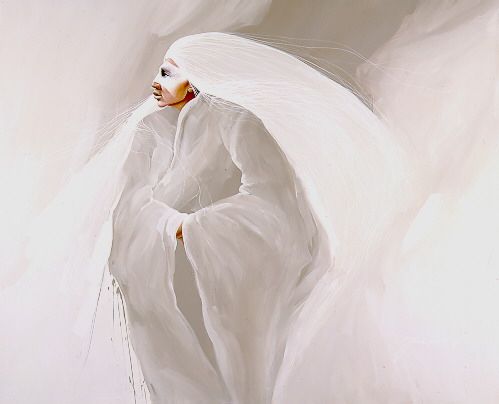
"When the last red man shall have perished, and the memory of my tribe shall have become a myth among the white men, these shores will swarm with the invisible dead of my tribe...when your children's children think themselves alone in the field, the store, upon the highway, or in the silence of the pathless woods, they will not be alone."
Chief Seattle - Dwamish
Thursday, June 21, 2007


Cherokee Nation to Host Job Fair
The upcoming Cherokee Nation job fair will offer employment opportunities and information related to Cherokee Nation and its entities.
Cherokee Nation News
TAHLEQUAH, Okla. — If you are new to the job market or are looking for other means of employment, the Cherokee Nation Job Fair is the place for you.
“The Cherokee Nation is proud to offer job fairs that allow our Cherokee citizens and our Oklahoma neighbors to apply for positions within the Cherokee Nation and its entities,” said Chad Smith, Principal Chief of the Cherokee Nation. “Self-reliance is important to the success of our Cherokee citizens and we feel that by offering job fairs, our citizens and other people within our Cherokee communities can become economically self-sufficient and in turn will make for a more successful Cherokee Nation.”
The job fair is hosted by Cherokee Nation’s Career Services Department and will take place on Thursday, June 28 from 12 p.m. to 6 p.m., at the “Place Where They Play,” located on the campus of Sequoyah Schools south of Tahlequah.
“People are completing school right now and getting out into the job market,” said Melanie Dodge of Cherokee Nation’s Career Services group. “We have the resources and materials to help them.”
The job fair will offer employment opportunities and information related to Cherokee Nation and its entities. Local businesses are invited and encouraged to take part.
Cherokee Nation News
TAHLEQUAH, Okla. — If you are new to the job market or are looking for other means of employment, the Cherokee Nation Job Fair is the place for you.
“The Cherokee Nation is proud to offer job fairs that allow our Cherokee citizens and our Oklahoma neighbors to apply for positions within the Cherokee Nation and its entities,” said Chad Smith, Principal Chief of the Cherokee Nation. “Self-reliance is important to the success of our Cherokee citizens and we feel that by offering job fairs, our citizens and other people within our Cherokee communities can become economically self-sufficient and in turn will make for a more successful Cherokee Nation.”
The job fair is hosted by Cherokee Nation’s Career Services Department and will take place on Thursday, June 28 from 12 p.m. to 6 p.m., at the “Place Where They Play,” located on the campus of Sequoyah Schools south of Tahlequah.
“People are completing school right now and getting out into the job market,” said Melanie Dodge of Cherokee Nation’s Career Services group. “We have the resources and materials to help them.”
The job fair will offer employment opportunities and information related to Cherokee Nation and its entities. Local businesses are invited and encouraged to take part.
Feds: Reservation flood damage at $421K
A federal preliminary assessment of flood damage to public infrastructure on the Crow and Northern Cheyenne Indian reservations came to $421,545.
Federal Emergency Manage-ment Agency and Montana Disaster and Emergency Services personnel completed the preliminary assessment, which includes Custer and Big Horn counties and the reservations, according to Montana Disaster and Emergency Services.
"While this does not meet the threshold for providing federal assistance through FEMA, we are committed to helping these communities recover," Dan Mc-Gowan, administrator for DES, wrote in a release. "We will continue to work with volunteer agencies and other federal agencies in pursuing assistance. An unmet needs committee will assist in determining other sources of help for individuals.
"Tribal officials have estimated damages in the millions, including $1.5 million in agricultural losses and about $1 million in expenses for the tribal response.
Want to know more? Click here: http://www.billingsgazette.net/articles/2007/06/21/news/state/40-flood.txt
Federal Emergency Manage-ment Agency and Montana Disaster and Emergency Services personnel completed the preliminary assessment, which includes Custer and Big Horn counties and the reservations, according to Montana Disaster and Emergency Services.
"While this does not meet the threshold for providing federal assistance through FEMA, we are committed to helping these communities recover," Dan Mc-Gowan, administrator for DES, wrote in a release. "We will continue to work with volunteer agencies and other federal agencies in pursuing assistance. An unmet needs committee will assist in determining other sources of help for individuals.
"Tribal officials have estimated damages in the millions, including $1.5 million in agricultural losses and about $1 million in expenses for the tribal response.
Want to know more? Click here: http://www.billingsgazette.net/articles/2007/06/21/news/state/40-flood.txt
Tribe shares new rescue boat with up-Island towns
The Martha's Vineyard Times
In the photo below left, Chilmark harbormaster Dennis Jason and Bret Stearns, Wampanoag Tribe of Gay Head (Aquinnah) Natural Resources department director, stand in a newly outfitted Hurricane rigid hull inflatable.
The tribe and the town of Chilmark recently approved an agreement under which the town will share the use of the boat.
The natural resources department acquired the boat through a federal surplus program from the US Coast Guard and outfitted it with a new Mercury Optimax engine, Raymarine electronics, and a searchlight to equip it for rescue and research operations.
The agreement stipulates that the vessel will be kept at the Harbormaster's dock in Menemsha. Mr. Jason will have the use of the vessel for harbor patrol, assisting boaters and rescue. In exchange, the town will contribute to maintenance and insurance costs.
Aquinnah harbormaster Brian Vanderhoop also has use of the vessel in the event of an emergency.
The natural resources department will use the inflatable for water quality monitoring, environmental research, and training, said Mr. Stearns. The department also has received Environmental Protection Agency funding to support an oil spill response training program with the Hurricane that will be made available to responders Island-wide, he said.
"The tribe and the Natural Resources Department have prepared this vessel specifically for the purpose of providing increased safety and environmental awareness in the community," said Mr. Stearns. "The vessel is in capable hands in Menemsha, and we are looking forward to building upon this relationship in the future."
In the photo below left, Chilmark harbormaster Dennis Jason and Bret Stearns, Wampanoag Tribe of Gay Head (Aquinnah) Natural Resources department director, stand in a newly outfitted Hurricane rigid hull inflatable.
The tribe and the town of Chilmark recently approved an agreement under which the town will share the use of the boat.
The natural resources department acquired the boat through a federal surplus program from the US Coast Guard and outfitted it with a new Mercury Optimax engine, Raymarine electronics, and a searchlight to equip it for rescue and research operations.
The agreement stipulates that the vessel will be kept at the Harbormaster's dock in Menemsha. Mr. Jason will have the use of the vessel for harbor patrol, assisting boaters and rescue. In exchange, the town will contribute to maintenance and insurance costs.
Aquinnah harbormaster Brian Vanderhoop also has use of the vessel in the event of an emergency.
The natural resources department will use the inflatable for water quality monitoring, environmental research, and training, said Mr. Stearns. The department also has received Environmental Protection Agency funding to support an oil spill response training program with the Hurricane that will be made available to responders Island-wide, he said.
"The tribe and the Natural Resources Department have prepared this vessel specifically for the purpose of providing increased safety and environmental awareness in the community," said Mr. Stearns. "The vessel is in capable hands in Menemsha, and we are looking forward to building upon this relationship in the future."
Wednesday, June 20, 2007
''Prez on the Rez'' brings candidates to Indian Country
By: Michelle Blank
In recent years, American Indian voters have helped decide close elections in five Western states: Washington, Montana, South Dakota, Arizona and New Mexico. And the tribes may well play an important role in swing-state elections in 2008.
That’s one reason why the Indigenous Democratic Network recently announced “Prez on the Rez,” a forum designed to bring together Democratic presidential hopefuls and tribal leaders. The August event will be the first time presidential candidates have faced off on reservation land.
So far, New Mexico Gov. Bill Richardson is the only candidate who has confirmed his attendance, although fund president Kalyn Free says other candidates, including John Edwards, Barack Obama and Hillary Clinton, have expressed interest.
Some 500 tribal leaders are expected to attend the event on the Morongo Reservation in Cabazon, Calif. Free anticipates that social issues such as poverty, health care, unemployment, alcoholism and suicide will dominate discussions. “The ills America suffers from are most prominently featured on Indian country,” she says. “Those are the issues that are going to be at the forefront and how the president can help give hope and opportunity.” And Free believes the forum will have a ripple effect on voting, as tribal leaders bring their opinions back home.
Nonpartisan groups and political parties alike are beginning to recognize the impact of American Indian voters. In 2002, a gaming proposition on the Arizona ballot turned out unprecedented levels of Indian voters from across the state. The proposition passed, and the Indian turnout also helped elect the state’s first Democratic governor in over 10 years. The Democratic National Committee now has a staffer dedicated to building party participation and voter awareness among Arizona’s 22 tribes.
In 2004, the Congress of American Indians led a nationwide get-out-the-vote effort and sponsored the first post-election study of tribal voting. All eight states studied reported increased Indian voter turnout in 2004 compared to 2000.
Free hopes this trend will spur candidates to listen to tribal leaders. During a speech at a legislative summit, she said, “We’re bringing these candidates in to Indian country so they can hear what we expect of them, and what we want them to do if they’re elected president.”
In recent years, American Indian voters have helped decide close elections in five Western states: Washington, Montana, South Dakota, Arizona and New Mexico. And the tribes may well play an important role in swing-state elections in 2008.
That’s one reason why the Indigenous Democratic Network recently announced “Prez on the Rez,” a forum designed to bring together Democratic presidential hopefuls and tribal leaders. The August event will be the first time presidential candidates have faced off on reservation land.
So far, New Mexico Gov. Bill Richardson is the only candidate who has confirmed his attendance, although fund president Kalyn Free says other candidates, including John Edwards, Barack Obama and Hillary Clinton, have expressed interest.
Some 500 tribal leaders are expected to attend the event on the Morongo Reservation in Cabazon, Calif. Free anticipates that social issues such as poverty, health care, unemployment, alcoholism and suicide will dominate discussions. “The ills America suffers from are most prominently featured on Indian country,” she says. “Those are the issues that are going to be at the forefront and how the president can help give hope and opportunity.” And Free believes the forum will have a ripple effect on voting, as tribal leaders bring their opinions back home.
Nonpartisan groups and political parties alike are beginning to recognize the impact of American Indian voters. In 2002, a gaming proposition on the Arizona ballot turned out unprecedented levels of Indian voters from across the state. The proposition passed, and the Indian turnout also helped elect the state’s first Democratic governor in over 10 years. The Democratic National Committee now has a staffer dedicated to building party participation and voter awareness among Arizona’s 22 tribes.
In 2004, the Congress of American Indians led a nationwide get-out-the-vote effort and sponsored the first post-election study of tribal voting. All eight states studied reported increased Indian voter turnout in 2004 compared to 2000.
Free hopes this trend will spur candidates to listen to tribal leaders. During a speech at a legislative summit, she said, “We’re bringing these candidates in to Indian country so they can hear what we expect of them, and what we want them to do if they’re elected president.”
Do you know...
Many horses was an Oglala Sioux medicine man, a friend of Sitting Bull, and a promoter of the Ghost Dance as the last protection against the white man's invasion. He organized the final Ghost Dance at Standing Rock Reservation in the Spring of 1890, to dance away the white soldiers camped at the foot of the hills. At dawn the white tipis of the U.S. Army were still visible, and Many Horses, with a heart full of grief, knew that the magic had failed. But the Great Spirit spoke to him. Turning his back on the rising sun, he addressed the assembled warriors:
"I will follow the white man's trail.I will make him my friend, but I will not bend my back to his burdens. I will be cunning as a coyote.I will ask him to help me understand his ways, then I will prepare the way for my children, and their children. The Great Spirit has shown me - a day will come when they will outrun the white man in his own shoes."
All other recorded prophesies of Many Horses have come to pass. The nations of the People see the beginnings of this final prophesy today. We have the white man's shoes.
"I will follow the white man's trail.I will make him my friend, but I will not bend my back to his burdens. I will be cunning as a coyote.I will ask him to help me understand his ways, then I will prepare the way for my children, and their children. The Great Spirit has shown me - a day will come when they will outrun the white man in his own shoes."
All other recorded prophesies of Many Horses have come to pass. The nations of the People see the beginnings of this final prophesy today. We have the white man's shoes.
Union of British Columbia Indian Chiefs
The Union of British Columbia Indian Chiefs was founded in November, 1969, by a majority of Indian chiefs in BC, partly in response to the federal government’s 1969 White Paper, which was a blueprint for assimilating Canada’s First Peoples, and partly as an inevitable outcome of a growing conviction of many of our people that our survival in the face of such policies depended upon our ability to work together.
The UBCIC founding head office is located in Kamloops, BC. The satellite office has had many homes over the years, all in the Lower Mainland, including the Musqueam and Squamish Reserves and Coqualeetza complex in Sardis. For some time now it has been located in the Gastown district of Vancouver.
Our Vision
One of the main principles of the Union of British Columbia Indian Chiefs is that, despite our differences, we will be stronger if we work together. The goal of the UBCIC is to support the work of our people, whether at the community, nation or international level, in our common fight for the recognition of our aboriginal rights and respect for our cultures and societies. Our goal, the goal of the people, has been to give the aboriginal people of BC a voice strong enough to be heard in every corner of the world. We have, and we continue, to carry out this mission in a number of different ways.
Another major principle behind our organization is the belief that knowledge is power. We are dedicated to information-sharing as well as to the fostering of fundamental and necessary research skills for Indian people in the province.
Our Mission
to improve intertribal relationships through common strategies to protect our Aboriginal Title
to hold the federal government to its fiduciary obligations and have them change their extinguishment policy
to support our peoples at regional, national and international forums
to continue to defend our Aboriginal Title through the revival of our way of life (political, social, economic and spiritual)
to build trust, honour and respect so we may achieve security and liberty in our lifetime and continue the healing and reconciliation (decolonization) of our Nations
Check out their website: http://www.ubcic.bc.ca/about/
The UBCIC founding head office is located in Kamloops, BC. The satellite office has had many homes over the years, all in the Lower Mainland, including the Musqueam and Squamish Reserves and Coqualeetza complex in Sardis. For some time now it has been located in the Gastown district of Vancouver.
Our Vision
One of the main principles of the Union of British Columbia Indian Chiefs is that, despite our differences, we will be stronger if we work together. The goal of the UBCIC is to support the work of our people, whether at the community, nation or international level, in our common fight for the recognition of our aboriginal rights and respect for our cultures and societies. Our goal, the goal of the people, has been to give the aboriginal people of BC a voice strong enough to be heard in every corner of the world. We have, and we continue, to carry out this mission in a number of different ways.
Another major principle behind our organization is the belief that knowledge is power. We are dedicated to information-sharing as well as to the fostering of fundamental and necessary research skills for Indian people in the province.
Our Mission
to improve intertribal relationships through common strategies to protect our Aboriginal Title
to hold the federal government to its fiduciary obligations and have them change their extinguishment policy
to support our peoples at regional, national and international forums
to continue to defend our Aboriginal Title through the revival of our way of life (political, social, economic and spiritual)
to build trust, honour and respect so we may achieve security and liberty in our lifetime and continue the healing and reconciliation (decolonization) of our Nations
Check out their website: http://www.ubcic.bc.ca/about/
Subscribe to:
Posts (Atom)


