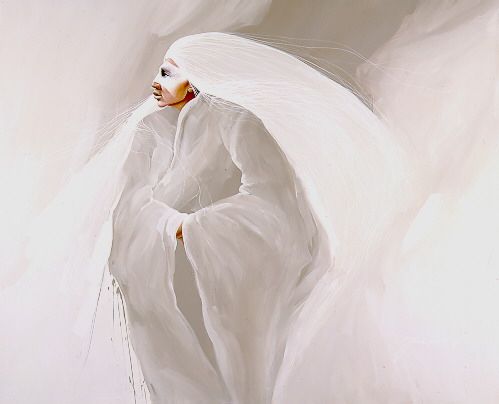
Prayer for the Protection of Bear Butte
August 1-12, 2007
All are invited to join in prayer for the protection of Bear Butte.
This camp is to pray for the protection of Bear Butte and for Indigenous Nations working to protect the cultural integrity and spiritual sanctity of their
Sacred Sites, for U.S. Servicemen and Women, and Nations impacted by armed conflict, starvation and global warming.
Daily Agenda to be announced.
Families are encouraged to take this time to focus on teaching their children and youth their history, culture, language, and spirituality.
The camp will follow protocol and traditional laws. Zero tolerance for alcohol, drugs, weapons, cultural and spiritual exploitation. Audio and videotaping only under controlled conditions. Media will be allowed under controlled conditions and handled by designation. Northern Cheyenne Military Society members will police the camp and work with local law enforcement authorities to keep order and observe the respect for Bear Butte. Camp criers will be utilized, no PA systems.
Please be prepared to be as self sufficient as possible. No open fires.
For Information and to Support this Grassroots Effort with Much-Needed Donations, Please contact Members of the Bear Butte Prayer Gathering Working Committee
or visit our donations section
THIS IS NOT A PROTEST CAMP
Want to know more? Check out this webpage: http://www.bearbutteprayergathering.org/
Wednesday, July 4, 2007


Blends of traditional and modern treatments are used to improve health
By William Kates
ONEIDA, N.Y. (AP) - Joellene Adams is nearing 70 and sees her doctor on the St. Regis Mohawk Reservation regularly for her diabetes medicine.
She also is a faithful follower of the tribe's traditional healers and sees no conflict with turning to them for treatment of other ills.
''The medicine is the only way to treat the diabetes in my body, but the old ways also help the mind and the spirit. Life requires balance,'' said Adams, one of 150 Iroquois elders at a recent health conference for American Indian senior citizens at the Oneida Indian Nation in central New York, member of the powerful Iroquois Confederacy.
American Indians have long experienced more health problems compared to other groups of Americans. Inadequate education, disproportionate poverty, discrimination in the delivery of health services and cultural differences are among the factors contributing to their poor health, according to the IHS.
''We have more access to doctors and drugs now than we've ever had. We need to find different ways to heal,'' said Dr. Marilyn Cook, a Cree who practices on the Canadian side of the St. Regis Mohawk Reservation.
''Western medicine is good. We can't do without it,'' Cook said. ''But we have our own ways of healing. We have our own ways of looking after ourselves. We sometimes forget that.''
Read full article here: http://www.indiancountry.com/content.cfm?id=1096415241
ONEIDA, N.Y. (AP) - Joellene Adams is nearing 70 and sees her doctor on the St. Regis Mohawk Reservation regularly for her diabetes medicine.
She also is a faithful follower of the tribe's traditional healers and sees no conflict with turning to them for treatment of other ills.
''The medicine is the only way to treat the diabetes in my body, but the old ways also help the mind and the spirit. Life requires balance,'' said Adams, one of 150 Iroquois elders at a recent health conference for American Indian senior citizens at the Oneida Indian Nation in central New York, member of the powerful Iroquois Confederacy.
American Indians have long experienced more health problems compared to other groups of Americans. Inadequate education, disproportionate poverty, discrimination in the delivery of health services and cultural differences are among the factors contributing to their poor health, according to the IHS.
''We have more access to doctors and drugs now than we've ever had. We need to find different ways to heal,'' said Dr. Marilyn Cook, a Cree who practices on the Canadian side of the St. Regis Mohawk Reservation.
''Western medicine is good. We can't do without it,'' Cook said. ''But we have our own ways of healing. We have our own ways of looking after ourselves. We sometimes forget that.''
Read full article here: http://www.indiancountry.com/content.cfm?id=1096415241
Culture Week closes out the school year at Wellpinit
By Jack McNeel
WELLPINIT, Wash. - A series of cultural events held June 11 - 13 at Wellpinit School on the Spokane Reservation culminated on the final day of school with an all-school picnic of food items created earlier in the week.
Even before the week began, some students had already started preparations. Elders took some students out to traditional sites to dig for camas, using digging sticks as it has been done for many generations. Thirteen students were involved and nearly five gallons of camas were collected.
Other students collected moss from tamarack trees, using poles about 10 feet long with hooks on the end. This allowed them to reach high in the branches, twist the moss around the pole and pull it down. The moss was then brought to school, cleaned of twigs, washed several times and cleaned again.
Marsha Wynecoop, one of many elders assisting throughout the week, explained the cooking procedure: ''When it's soaked, we mix a little sugar in and it's put in a muslin bag and placed in a pit, several layers of it. It has a sort of licorice taste and is eaten like a pudding or dried and cut up. It's high in calcium and one of the first baby foods when they're being weaned because of the calcium.''
There's more here: http://www.indiancountry.com/content.cfm?id=1096415299
WELLPINIT, Wash. - A series of cultural events held June 11 - 13 at Wellpinit School on the Spokane Reservation culminated on the final day of school with an all-school picnic of food items created earlier in the week.
Even before the week began, some students had already started preparations. Elders took some students out to traditional sites to dig for camas, using digging sticks as it has been done for many generations. Thirteen students were involved and nearly five gallons of camas were collected.
Other students collected moss from tamarack trees, using poles about 10 feet long with hooks on the end. This allowed them to reach high in the branches, twist the moss around the pole and pull it down. The moss was then brought to school, cleaned of twigs, washed several times and cleaned again.
Marsha Wynecoop, one of many elders assisting throughout the week, explained the cooking procedure: ''When it's soaked, we mix a little sugar in and it's put in a muslin bag and placed in a pit, several layers of it. It has a sort of licorice taste and is eaten like a pudding or dried and cut up. It's high in calcium and one of the first baby foods when they're being weaned because of the calcium.''
There's more here: http://www.indiancountry.com/content.cfm?id=1096415299
Polishing the covenant is critical now
You say that you are our Father and I am your son.
We say, We will not be like Father and Son, but like Brothers.
This wampum belt confirms our words. These two rows will symbolize two paths or two vessels, traveling down the same river together.
One, a birch bark canoe, will be for the Indian People, their laws, their customs and their ways.
The other, a ship, will be for the white people and their laws, their customs and their ways.
We shall each travel the river together, side by side, but in our boat. Neither of us will make compulsory laws or interfere in the internal affairs of the other. Neither of us will try to steer the other's vessel.
The agreement has been kept by the Iroquois to this date.
These words were spoken to reiterate the relationship between the Haudenosaunee (Iroquois) people and their white ''brothers'' upon agreeing to co-exist as separate but equal governments. As the Dutch became principals in the North American fur trade, they sought more control of Indian lands in the East. Historians point out that although the agreement, commonly known as the ''Silver Covenant Chain,'' is woven throughout Iroquois oral and written history and up through contemporary times, it is barely mentioned in the Dutch record.
This disconnect is reflective of the general attitude toward Indian treaties by our ''brothers.'' The Indians' intention was to reaffirm the freedom to conduct its affairs without intervention from another sovereign (and meant to stand ''as long as the sun shines upon this earth''). It is not clear that the agreement meant as much to the Dutch. Such agreements, covenants and treaties often were discarded by European and, later, American signatories when they proved contradictory to land expansion.
Read more here: http://www.indiancountry.com/content.cfm?id=1096415322
We say, We will not be like Father and Son, but like Brothers.
This wampum belt confirms our words. These two rows will symbolize two paths or two vessels, traveling down the same river together.
One, a birch bark canoe, will be for the Indian People, their laws, their customs and their ways.
The other, a ship, will be for the white people and their laws, their customs and their ways.
We shall each travel the river together, side by side, but in our boat. Neither of us will make compulsory laws or interfere in the internal affairs of the other. Neither of us will try to steer the other's vessel.
The agreement has been kept by the Iroquois to this date.
These words were spoken to reiterate the relationship between the Haudenosaunee (Iroquois) people and their white ''brothers'' upon agreeing to co-exist as separate but equal governments. As the Dutch became principals in the North American fur trade, they sought more control of Indian lands in the East. Historians point out that although the agreement, commonly known as the ''Silver Covenant Chain,'' is woven throughout Iroquois oral and written history and up through contemporary times, it is barely mentioned in the Dutch record.
This disconnect is reflective of the general attitude toward Indian treaties by our ''brothers.'' The Indians' intention was to reaffirm the freedom to conduct its affairs without intervention from another sovereign (and meant to stand ''as long as the sun shines upon this earth''). It is not clear that the agreement meant as much to the Dutch. Such agreements, covenants and treaties often were discarded by European and, later, American signatories when they proved contradictory to land expansion.
Read more here: http://www.indiancountry.com/content.cfm?id=1096415322
Tuesday, July 3, 2007
Quotes
"The more I consider the condition of the white men, the more fixed becomes my opinion that they lose much by subjecting themselves to what they call laws and regulations." -
Tomochichi - Creek
Tomochichi - Creek
Port, tribe partner on marina development
By Jessica Musicar
NORTH BEND - In a convergence of interests, the Coquille Economic Development Corp. and the Oregon International Port of Coos Bay have partnered up to develop a new marina next to The Mill Casino-Hotel.
The idea, which had been bandied around between Port and CEDCO representatives for more than six months, is finally building up steam, as the two groups recently joined under a memorandum of understanding to begin a feasibility study for the project. The memorandum was approved at the Port Commission's meeting June 21. CEDCO's board of directors approved it during its quarterly meeting on Friday.
Michael Gaul, the deputy executive director of the Port of Coos Bay, said the feasibility study, which will cost CEDCO and the port about $6,000 each, will determine the marketability of a new marina to see if it makes sense.
“We believe it does,” Gaul said, adding that the small boat basin would be built north of The Mill, adjacent to its RV park. “That report will determine whether we'll go to phase two or not.”
The study is expected to kick off this month and last about four months. If that goes well, the next step of the four-phase project will be to gather funding, permits and start engineering. Other phases include dredging that portion of the bay, construction, developing a management plan and profit sharing.
He said it could be a beneficial and necessary addition to the area's waterways, as the marina in Charleston often carries a waiting list of 50 boats.“It's been a mission of the port for the past couple of years to increase moorage,”
Gaul said.CEDCO is the business arm of the Coquille Indian Tribe.
Read more here: http://www.nativebiz.com/community/News,op=visit,nid=15824.html
NORTH BEND - In a convergence of interests, the Coquille Economic Development Corp. and the Oregon International Port of Coos Bay have partnered up to develop a new marina next to The Mill Casino-Hotel.
The idea, which had been bandied around between Port and CEDCO representatives for more than six months, is finally building up steam, as the two groups recently joined under a memorandum of understanding to begin a feasibility study for the project. The memorandum was approved at the Port Commission's meeting June 21. CEDCO's board of directors approved it during its quarterly meeting on Friday.
Michael Gaul, the deputy executive director of the Port of Coos Bay, said the feasibility study, which will cost CEDCO and the port about $6,000 each, will determine the marketability of a new marina to see if it makes sense.
“We believe it does,” Gaul said, adding that the small boat basin would be built north of The Mill, adjacent to its RV park. “That report will determine whether we'll go to phase two or not.”
The study is expected to kick off this month and last about four months. If that goes well, the next step of the four-phase project will be to gather funding, permits and start engineering. Other phases include dredging that portion of the bay, construction, developing a management plan and profit sharing.
He said it could be a beneficial and necessary addition to the area's waterways, as the marina in Charleston often carries a waiting list of 50 boats.“It's been a mission of the port for the past couple of years to increase moorage,”
Gaul said.CEDCO is the business arm of the Coquille Indian Tribe.
Read more here: http://www.nativebiz.com/community/News,op=visit,nid=15824.html
Land return enables Nipmuc celebration
By Donna Laurent Caruso
OXFORD, Mass. - For millennia, Nipmuc people observed the summer solstice from KekamowadChaug, a place in what is today Oxford, which means ''mountain where the earth trembles.''
''It is a very sacred site to our people,'' said Larry Spotted Crow Mann, of the Historical Nipmuc Tribe.
After King Phillip's War in the late 1600s, KekamowadChaug was taken over by French settlers. A fort was built to defend against Nipmuc attacks.
Now, however, for the first time in more than 300 years, Nipmuc people are again observing the solstice from what is today known as Huguenot Hill.
Seven acres of land there was recently returned to the Nipmuc by a descendant of one of the settlers.
The present-day Nipmuc ''reservation'' is famous for its size: It is only four and one-half acres, the smallest in North America, as well as one of its first. The tribe had won federal recognition in 2002, only to have that decision overturned by the Bush administration. Land claims and appeals are ongoing.
Spotted Crow had formed a Unity Conference with his cousin, David White Tall Pine, following the disarray after the overturned decision. Tall Pine is on the Chaubunagungamaug Band of Nipmucs Tribal Council.
By the 20th century, KekamowadChaug was owned by LaMountain Bros. Inc.
''One of the brothers, Richard LaMountain, was killed not long ago in a motorcycle accident. The other brother, Jim, had a dream shortly after Richard died,'' Spotted Crow said.
In the profoundly life-altering event for Jim, Richard conveyed in the dream that their land needed to be given back to ''the Indians,'' that the place was special to them. Not aware of the local Nipmuc bands, it took an intense search on Jim's part before he located Tall Pine, who as a result of the Unity Conference was then able to accept the land transfer for all the bands.
There's more here:
OXFORD, Mass. - For millennia, Nipmuc people observed the summer solstice from KekamowadChaug, a place in what is today Oxford, which means ''mountain where the earth trembles.''
''It is a very sacred site to our people,'' said Larry Spotted Crow Mann, of the Historical Nipmuc Tribe.
After King Phillip's War in the late 1600s, KekamowadChaug was taken over by French settlers. A fort was built to defend against Nipmuc attacks.
Now, however, for the first time in more than 300 years, Nipmuc people are again observing the solstice from what is today known as Huguenot Hill.
Seven acres of land there was recently returned to the Nipmuc by a descendant of one of the settlers.
The present-day Nipmuc ''reservation'' is famous for its size: It is only four and one-half acres, the smallest in North America, as well as one of its first. The tribe had won federal recognition in 2002, only to have that decision overturned by the Bush administration. Land claims and appeals are ongoing.
Spotted Crow had formed a Unity Conference with his cousin, David White Tall Pine, following the disarray after the overturned decision. Tall Pine is on the Chaubunagungamaug Band of Nipmucs Tribal Council.
By the 20th century, KekamowadChaug was owned by LaMountain Bros. Inc.
''One of the brothers, Richard LaMountain, was killed not long ago in a motorcycle accident. The other brother, Jim, had a dream shortly after Richard died,'' Spotted Crow said.
In the profoundly life-altering event for Jim, Richard conveyed in the dream that their land needed to be given back to ''the Indians,'' that the place was special to them. Not aware of the local Nipmuc bands, it took an intense search on Jim's part before he located Tall Pine, who as a result of the Unity Conference was then able to accept the land transfer for all the bands.
There's more here:
Subscribe to:
Posts (Atom)


