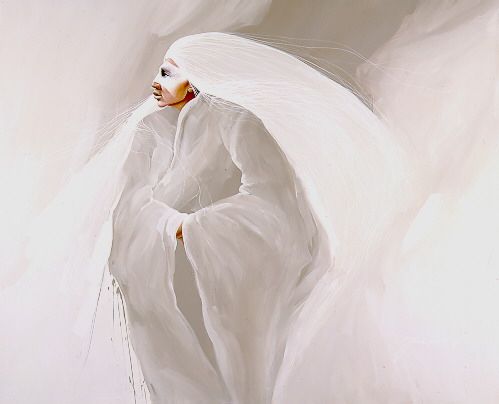
Urshel was born at the Phoenix Indian School and is of Ute/Pima descent. He is a member of the Pima Salt River Community Indian Tribe. When Urshel was just two years old, his family moved to a working ranch on the Ute Reservation in Utah. It was on this ranch that he, along with two sisters and a brother, spent their growing up years.
In 1956, planning to make the military his career, he joined the U.S. Marine Corps where he served for eight years. However, by 1963 having children to consider, he decided that the transient lifestyle of the military was not what he wanted for his family so he resigned from the service.
Urshel then took a position teaching art at the Intermountain Inter-Tribal School in Brigham City, Utah. Where, at the same time, he continued to work on his own skills by studying with such noted artist as Kent Wallace and Professor Linstrom at Utah State University.
During his years at the Intermountain Inter-Tribal School, in addition to his teaching duties, he was Director of Cultural Affairs which included the pow-wows. Through this, he became more deeply involved with the traditional native American dances. He and his three sons Keith, Tony and Dan danced in competition for fifteen years. The dancing proved to be an important element in he personal and professional growth.
Urshel described the feeling of being dressed in traditional dress and dancing to a good drum ...
"I recognize the song and who is singing by the style and the drum they use ... it makes me feel very connected to the past and the traditions of my people ... it makes me feel Indian".
Want to know more? Click here: http://www.artnatam.com/utaylor/bio.html
Monday, December 10, 2007


Cherokee Nation Foster Parenting Program Makes a Difference for Life
TAHLEQUAH, Okla. — It’s the most wonderful time of the year to open your heart and your home to a child in need, by becoming a Cherokee Nation foster parent.
"Every child deserves the safety and security of a loving home,” said Chad Smith, Principal Chief of the Cherokee Nation. “If there is a place in your life to help care for a child placed with Indian Child Welfare (ICW), I really encourage you to consider making a difference in that child’s life by becoming a foster parent.”
The ICW Foster Care Program was designed to place children who have been neglected or abused in temporary homes. ICW’s ultimate goal is to provide a safe and permanent home to tribal children who are unable to be cared for by their biological family.
“Our need for foster homes is mainly within the jurisdictional area of the Cherokee Nation and throughout the state of Oklahoma,” said Ellen Guttillo, Child Welfare Specialist II. “It is our responsibility to make sure that our Native American children are in foster homes that are compliant with the Indian Child Welfare Act. Therefore, our need for foster homes is an ongoing challenge.”
For more information click here: http://www.cherokee.org/PressRoom/2469/Story.aspx
"Every child deserves the safety and security of a loving home,” said Chad Smith, Principal Chief of the Cherokee Nation. “If there is a place in your life to help care for a child placed with Indian Child Welfare (ICW), I really encourage you to consider making a difference in that child’s life by becoming a foster parent.”
The ICW Foster Care Program was designed to place children who have been neglected or abused in temporary homes. ICW’s ultimate goal is to provide a safe and permanent home to tribal children who are unable to be cared for by their biological family.
“Our need for foster homes is mainly within the jurisdictional area of the Cherokee Nation and throughout the state of Oklahoma,” said Ellen Guttillo, Child Welfare Specialist II. “It is our responsibility to make sure that our Native American children are in foster homes that are compliant with the Indian Child Welfare Act. Therefore, our need for foster homes is an ongoing challenge.”
For more information click here: http://www.cherokee.org/PressRoom/2469/Story.aspx
Occaneechi Homeland Preservation Project
Bringing the Past and Future Together
In August 2002, the Occaneechi Band of the Saponi Nation embarked on an ambitious project; to begin buying back a portion of its ancestral lands in the “Little Texas” Community of NE Alamance County, North Carolina. This was called the Occaneechi Homeland Preservation Project.
For the first time in over 250 years, the Occaneechi own land again as a Tribe, to be used for economic development for the tribal community, as well as for tribal administrative offices. On this small tract of rural land, the Occaneechi have begun a legacy for their children. These plans began to take shape in February 2004, when the tribe purchased 25 acres of rolling farmland on Daily Store Rd. on the headwaters of Stagg Creek. The tribe has worked with the Landscape Architecture Department at North Carolina A & T University and the Rural Initiative Project, Inc. of Winston-Salem to create a master plan for the site, which will include
*A permanent ceremonial ground (completed Spring 2005)
*Tribal Orchards with heirloom apples, chestnuts paw-paws and muscadine grapes (ongoing)
*Reconstructed 1701 Occaneechi Village and 1880’s era farm (in construction)
*Educational nature trails (in planning)
*Tribal museum (in planning)
*Administrative office space, community meeting area, classroom space (in planning)
This complex will serve as an educational tool, not just for the Tribal members, but for the public as a whole. Each Fall since 2005, the Occaneechi tribe has hosted over 600 area elementary and middle school students on the tribal center property, teaching them about traditional dance, lifeways, outdoor cooking, storytelling, flint-knapping, hunting and fishing, and Southeastern regalia. As the complex develops, this type of cultural/educational activity will be done on a regular basis, employing Tribal members as guides and cultural interpreters.
Anyone interested in the lifestyle of the Siouan Tribes of the North Carolina and Virginia Piedmont will find the planned complex an invaluable resource, and the tribe is networking with the Alamance County Convention and Visitor’s Bureau as it continues to develop the project. As a tourist attraction, it will, in conjunction with the Tribe’s Pow-wows, festivals, and historical programs, draw thousands of visitors into the Alamance county area, while helping preserve the quiet rural way of life in the community.
Learn more about this project and how you can help here: http://www.occaneechi-saponi.org/homeland_project.html
In August 2002, the Occaneechi Band of the Saponi Nation embarked on an ambitious project; to begin buying back a portion of its ancestral lands in the “Little Texas” Community of NE Alamance County, North Carolina. This was called the Occaneechi Homeland Preservation Project.
For the first time in over 250 years, the Occaneechi own land again as a Tribe, to be used for economic development for the tribal community, as well as for tribal administrative offices. On this small tract of rural land, the Occaneechi have begun a legacy for their children. These plans began to take shape in February 2004, when the tribe purchased 25 acres of rolling farmland on Daily Store Rd. on the headwaters of Stagg Creek. The tribe has worked with the Landscape Architecture Department at North Carolina A & T University and the Rural Initiative Project, Inc. of Winston-Salem to create a master plan for the site, which will include
*A permanent ceremonial ground (completed Spring 2005)
*Tribal Orchards with heirloom apples, chestnuts paw-paws and muscadine grapes (ongoing)
*Reconstructed 1701 Occaneechi Village and 1880’s era farm (in construction)
*Educational nature trails (in planning)
*Tribal museum (in planning)
*Administrative office space, community meeting area, classroom space (in planning)
This complex will serve as an educational tool, not just for the Tribal members, but for the public as a whole. Each Fall since 2005, the Occaneechi tribe has hosted over 600 area elementary and middle school students on the tribal center property, teaching them about traditional dance, lifeways, outdoor cooking, storytelling, flint-knapping, hunting and fishing, and Southeastern regalia. As the complex develops, this type of cultural/educational activity will be done on a regular basis, employing Tribal members as guides and cultural interpreters.
Anyone interested in the lifestyle of the Siouan Tribes of the North Carolina and Virginia Piedmont will find the planned complex an invaluable resource, and the tribe is networking with the Alamance County Convention and Visitor’s Bureau as it continues to develop the project. As a tourist attraction, it will, in conjunction with the Tribe’s Pow-wows, festivals, and historical programs, draw thousands of visitors into the Alamance county area, while helping preserve the quiet rural way of life in the community.
Learn more about this project and how you can help here: http://www.occaneechi-saponi.org/homeland_project.html
MSU makes Natives priority
By: Jodi Rave
BOZEMAN - Montana State University president Geoffrey Gamble represents a rare form of leadership in academia when it comes to embracing a Native presence on campus.
Gamble was selected to lead MSU as the college's 11th president in 2000. One of the most remarkable steps he's taken was the appointment of Henrietta Mann as a special adviser in his cabinet. Mann, a Southern Cheyenne woman, has been lecturing, advising and teaching on college campuses for the last 36 years.
The president has since created a Council of Elders. I attended the Nov. 30 meeting of elders, a group that has been meeting twice a year for nearly four years. Elders from 12 tribes and honorary members in the state are invited to the university to share their educational and life experiences with the president.
“President Gamble gives weight and validity to what we say,” said Richard Little Bear, president of Chief Dull Knife College on the Northern Cheyenne Reservation. “I'm going to keep making time to come over here. In the long run, it has a lot of implications for our students and how our students are treated on the campus. Those are the types of things that can help our students achieve.”
Gamble is already looking forward to the group's next meeting in April.
Read more here: http://www.missoulian.com/articles/2007/12/09/jodirave/rave19.txt
BOZEMAN - Montana State University president Geoffrey Gamble represents a rare form of leadership in academia when it comes to embracing a Native presence on campus.
Gamble was selected to lead MSU as the college's 11th president in 2000. One of the most remarkable steps he's taken was the appointment of Henrietta Mann as a special adviser in his cabinet. Mann, a Southern Cheyenne woman, has been lecturing, advising and teaching on college campuses for the last 36 years.
The president has since created a Council of Elders. I attended the Nov. 30 meeting of elders, a group that has been meeting twice a year for nearly four years. Elders from 12 tribes and honorary members in the state are invited to the university to share their educational and life experiences with the president.
“President Gamble gives weight and validity to what we say,” said Richard Little Bear, president of Chief Dull Knife College on the Northern Cheyenne Reservation. “I'm going to keep making time to come over here. In the long run, it has a lot of implications for our students and how our students are treated on the campus. Those are the types of things that can help our students achieve.”
Gamble is already looking forward to the group's next meeting in April.
Read more here: http://www.missoulian.com/articles/2007/12/09/jodirave/rave19.txt
Friday, December 7, 2007
Featured Tribe: Karankawa - Texas
The Karankawa Indians lived along the Texas coast of the Gulf of Mexico. Their territory was from the west end of Galveston Island down the coast to where Corpus Christie is today. There were several bands, or maybe even several tribes. We are not sure, because much of the history of the Karankawa is lost. No one bothered to study them in any detail while they were still around to study. Making things worse, the Karankawa were favorite targets of many false myths and made up stories.
They were pretty good fighters and European settlers feared them. The Europeans also wanted the Karankawa's land. This may be why they made up so many bad myths about them. Many of the Karankawa warriors were over 6 feet tall. People were shorter back then and 6 foot tall Indians were really big. They had bows almost as tall as they were and shot long arrows made from slender shoots of cane. It is said they would suddenly show up in their canoes, seemingly out of no where, to attack. They would run away and retreat or escape the same way. They would go into the swamps and swampy woods were Europeans had a hard time following. There was a good reason why they were such good fighters and why they were so unfriendly to American settlers.
By the time American settlers came in contact with the Karankawa the Karankawa had already had some pretty bad experiences with Europeans. Early on, Spanish slave traders cruised along the coast of Texas and they would kidnap Karankawas by force or trickery and make slaves out of them. Later, the French, under the explorer LaSalle, were very unfriendly. The French stole two canoes without asking. They just took them. When the Karankawa asked that the canoes be given back the French refused and a shooting war between the French and Karankawa started. The French lost and LaSalle's small colony was destroyed by the Karankawas. From the Karankawa's point of view, every time the Europeans came around, the Europeans would try to steal from, kidnap, or kill the Karankawa. No wonder they were not very friendly. Seems like this happened to all the Indians in Texas and America. This was not always the case.
There's more here: http://www.texasindians.com/karank.htm
They were pretty good fighters and European settlers feared them. The Europeans also wanted the Karankawa's land. This may be why they made up so many bad myths about them. Many of the Karankawa warriors were over 6 feet tall. People were shorter back then and 6 foot tall Indians were really big. They had bows almost as tall as they were and shot long arrows made from slender shoots of cane. It is said they would suddenly show up in their canoes, seemingly out of no where, to attack. They would run away and retreat or escape the same way. They would go into the swamps and swampy woods were Europeans had a hard time following. There was a good reason why they were such good fighters and why they were so unfriendly to American settlers.
By the time American settlers came in contact with the Karankawa the Karankawa had already had some pretty bad experiences with Europeans. Early on, Spanish slave traders cruised along the coast of Texas and they would kidnap Karankawas by force or trickery and make slaves out of them. Later, the French, under the explorer LaSalle, were very unfriendly. The French stole two canoes without asking. They just took them. When the Karankawa asked that the canoes be given back the French refused and a shooting war between the French and Karankawa started. The French lost and LaSalle's small colony was destroyed by the Karankawas. From the Karankawa's point of view, every time the Europeans came around, the Europeans would try to steal from, kidnap, or kill the Karankawa. No wonder they were not very friendly. Seems like this happened to all the Indians in Texas and America. This was not always the case.
There's more here: http://www.texasindians.com/karank.htm
Two Dogs
Cherokee prophecy
There are two dogs (Alpha and Beta Canis Majori) who guard the path to the land of souls. To get past the dogs one should bring food. Be warned, if you give food to the first dog (Alpha) he will let you pass, but if you fail to save some food for the second dog (Beta) you will be trapped between them forever.
There are two dogs (Alpha and Beta Canis Majori) who guard the path to the land of souls. To get past the dogs one should bring food. Be warned, if you give food to the first dog (Alpha) he will let you pass, but if you fail to save some food for the second dog (Beta) you will be trapped between them forever.
Navajo couple hopes to inspire other American Indian artists with clothing designs
Associated Press
SHIPROCK The Navajo Nation operates much like an independent country, but when it comes to fashion and music it's as American as New York City.
That's the theory two young fashion designers bet on when they dropped out of college to start a line of edgy, graffiti-inspired clothing.
"Mainly we started to find extra money to pay bills, but it turned into this rapidly growing clothing company," said Tyson Powless, co-founder of the Shiprock-based UN3EK SY5TEM.
Powless, 28, grew up in Wisconsin, then moved to Tuba City, Ariz., for high school. He left Dixie College in St. George, Utah, a semester short of earning an associate's degree to try his hand at screen printing. His hand was well practiced; he began doodling Transformers and G.I. Joe figures at age 3.
The self-taught graffiti artist found a day job in Tempe, Ariz., and sold his original, screen-printed T-shirts by night at hip hop clubs. The designs feature a cross between the music culture and Powless's American Indian roots designs such as a Mohawk graphic and a white-on-black image of Chief Sitting Bull.
"I got to town with a portfolio of art," he said. "I was really hungry to get my stuff on T-shirts."
Read more here: http://www.lcsun-news.com/latest/ci_7660196
SHIPROCK The Navajo Nation operates much like an independent country, but when it comes to fashion and music it's as American as New York City.
That's the theory two young fashion designers bet on when they dropped out of college to start a line of edgy, graffiti-inspired clothing.
"Mainly we started to find extra money to pay bills, but it turned into this rapidly growing clothing company," said Tyson Powless, co-founder of the Shiprock-based UN3EK SY5TEM.
Powless, 28, grew up in Wisconsin, then moved to Tuba City, Ariz., for high school. He left Dixie College in St. George, Utah, a semester short of earning an associate's degree to try his hand at screen printing. His hand was well practiced; he began doodling Transformers and G.I. Joe figures at age 3.
The self-taught graffiti artist found a day job in Tempe, Ariz., and sold his original, screen-printed T-shirts by night at hip hop clubs. The designs feature a cross between the music culture and Powless's American Indian roots designs such as a Mohawk graphic and a white-on-black image of Chief Sitting Bull.
"I got to town with a portfolio of art," he said. "I was really hungry to get my stuff on T-shirts."
Read more here: http://www.lcsun-news.com/latest/ci_7660196
Subscribe to:
Posts (Atom)


