Wednesday, December 19, 2007
American Indian Proverb
When you were born, you cried and the world rejoiced. Live your life so that when you die, the world cries and you rejoice. - Cherokee


Do you know...
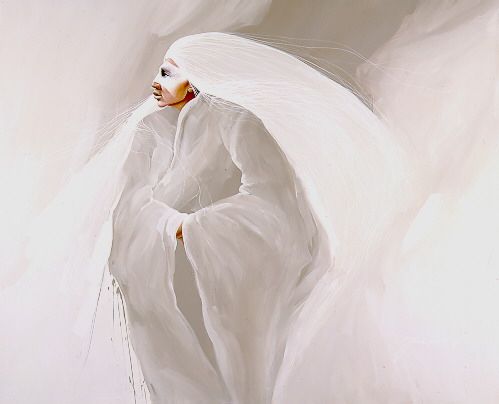
Oren Lyons (b.1930) Oren R. Lyons is a traditional Faithkeeper and chief of the Wolf Clan and a proud and accomplished Native American who works tirelessly towards the issues concerning Indigenous peoples in the United States and the world. He is a member of the Onondaga Nation Council of Chiefs of the Six Nations of the Iroquois Confederacy, (Haudenosaunee) consisting of Seneca, Cayuga, Onondaga, Oneida, Mohawk and the Tuscarora Indian reservations in northern New York state. Among his accolades he has received the Ellis Island Congressional Medal of Honor, the National Audubon Award, the First Annual Earth Day International Award of the United Nations, and the Elder and Wiser Award of the Rosa Parks Institute for Human Rights.
He is deeply involved with national and international issues that affect native peoples and has represented them in many forums throughout the world, including several at the UN focusing on the rights and status of indigenous peoples, the environment and sustainable development.
Oren Lyons was born in 1930 and raised in the traditional culture and practices of the Iroquois on the Seneca and Onondaga reservations in northern New York State.
After serving in the Army, he graduated in 1958 from the Syracuse University College of Fine Arts. He then pursued a career in commercial art after he moved to New York City, becoming the art and planning director of Norcross Greeting Cards with 200 artists under his supervision. He has exhibited his own paintings widely and is well noted in certain circles as a talented American Indian artist. He has since been awarded an honorary Doctor of Laws degree from the Syracuse University.
Drawn by a yearning for his culture Lyons returned to Onondaga in 1970. He is recognized not only in the United States and Canada but internationally as an eloquent and respected spokesperson on behalf of Native peoples. He is a sought-after lecturer or participant in forums in a variety of areas, including not only American Indian traditions, but Indian law and history, human rights, environment and interfaith dialogue.
He is deeply involved with national and international issues that affect native peoples and has represented them in many forums throughout the world, including several at the UN focusing on the rights and status of indigenous peoples, the environment and sustainable development.
Oren Lyons was born in 1930 and raised in the traditional culture and practices of the Iroquois on the Seneca and Onondaga reservations in northern New York State.
After serving in the Army, he graduated in 1958 from the Syracuse University College of Fine Arts. He then pursued a career in commercial art after he moved to New York City, becoming the art and planning director of Norcross Greeting Cards with 200 artists under his supervision. He has exhibited his own paintings widely and is well noted in certain circles as a talented American Indian artist. He has since been awarded an honorary Doctor of Laws degree from the Syracuse University.
Drawn by a yearning for his culture Lyons returned to Onondaga in 1970. He is recognized not only in the United States and Canada but internationally as an eloquent and respected spokesperson on behalf of Native peoples. He is a sought-after lecturer or participant in forums in a variety of areas, including not only American Indian traditions, but Indian law and history, human rights, environment and interfaith dialogue.
Bald Eagle Trial
By: Ben Neary
DENVER (AP) — The future of a Northern Arapaho man who shot a bald eagle for use in his tribe's Sun Dance two years ago now rides on the eventual decision of a federal appeals court.
Winslow Friday, 23 of Ethete, Wyo., listened Monday as lawyers representing him and his tribe sparred with a lawyer from the U.S. Department of Justice before a panel of judges at 10th U.S. Circuit Court of Appeals in Denver.
The U.S. Department of Justice wants the appeals court to reinstate a criminal charge against Friday. If he's convicted of illegally killing the bald eagle, he could be sentenced to up to a year in jail and fined $100,000.
The appeals court did not immediately issue a ruling on the case after Monday's arguments, leaving Friday to wait.
"Getting older, I understand what stress does to you now," Friday said after the court hearing.
Friday acknowledges killing the eagle with a rifle on the Wind River Indian Reservation in central Wyoming, home to both the Northern Arapaho and Eastern Shoshone tribes.
Friday says he didn't know about a U.S. Fish and Wildlife Service program that allows American Indians to apply for permits to kill eagles for religious purposes. Attorneys representing him and his tribe claim the federal agency did its best to keep the program secret and only grudgingly issued the permits.
Late last year, U.S. District Judge William F. Downes agreed, dismissing the criminal charge against Friday.
"Although the government professes respect and accommodation of the religious practices of Native Americans, its actions show callous indifference to such practices," Downes wrote in his ruling. "It is clear to this court that the government has no intention of accommodating the religious beliefs of Native Americans except on its own terms and in its own good time."
Read more here: http://www.reznetnews.org/article/news/bald-eagle-trial
DENVER (AP) — The future of a Northern Arapaho man who shot a bald eagle for use in his tribe's Sun Dance two years ago now rides on the eventual decision of a federal appeals court.
Winslow Friday, 23 of Ethete, Wyo., listened Monday as lawyers representing him and his tribe sparred with a lawyer from the U.S. Department of Justice before a panel of judges at 10th U.S. Circuit Court of Appeals in Denver.
The U.S. Department of Justice wants the appeals court to reinstate a criminal charge against Friday. If he's convicted of illegally killing the bald eagle, he could be sentenced to up to a year in jail and fined $100,000.
The appeals court did not immediately issue a ruling on the case after Monday's arguments, leaving Friday to wait.
"Getting older, I understand what stress does to you now," Friday said after the court hearing.
Friday acknowledges killing the eagle with a rifle on the Wind River Indian Reservation in central Wyoming, home to both the Northern Arapaho and Eastern Shoshone tribes.
Friday says he didn't know about a U.S. Fish and Wildlife Service program that allows American Indians to apply for permits to kill eagles for religious purposes. Attorneys representing him and his tribe claim the federal agency did its best to keep the program secret and only grudgingly issued the permits.
Late last year, U.S. District Judge William F. Downes agreed, dismissing the criminal charge against Friday.
"Although the government professes respect and accommodation of the religious practices of Native Americans, its actions show callous indifference to such practices," Downes wrote in his ruling. "It is clear to this court that the government has no intention of accommodating the religious beliefs of Native Americans except on its own terms and in its own good time."
Read more here: http://www.reznetnews.org/article/news/bald-eagle-trial
Osages to the Rescue
By: Shannon Shaw
PAWHUSKA, Okla.—The Osage Nation came to the aid of hundreds of families without power Dec. 9, after an ice storm hit Oklahoma, making national headlines.
The ice storm started the night of Dec. 8 and continued for two days, hitting the southern part of Osage County with an estimated inch to an inch and a half of ice and the northern part of the county with a half-inch of ice, said Craig Sullivan, meteorologist for the National Weather Service.
Osage tribal officials held an emergency relief meeting the next day as calls from friends and relatives of those who lost power poured in to the tribe's offices, said Paula Stabler, Osage Nation communications officer.
Hardest hit were the Osage County communities of Skiatook, Avant, Osage and Prue.
"This was the worst power outage in Oklahoma's history, but we consider ourselves lucky with this storm," said Osage Nation Principal Chief Jim Gray. "The power lines and trees were down over most of the reservation, but the roads were clear and Pawhuska city limits kept its power.
"Our people are tired, but they responded immediately and were glad to help."
The Palace of the Osage Grocery Store, Women, Infants and Children program, Osage Nation Food Distribution and Osage Nation Home Health donated food for the relief effort, Stabler said. Tribal members also contributed money for the effort.
Want the whole story? Click here: http://www.reznetnews.org/article/feature-article/osages-rescue
PAWHUSKA, Okla.—The Osage Nation came to the aid of hundreds of families without power Dec. 9, after an ice storm hit Oklahoma, making national headlines.
The ice storm started the night of Dec. 8 and continued for two days, hitting the southern part of Osage County with an estimated inch to an inch and a half of ice and the northern part of the county with a half-inch of ice, said Craig Sullivan, meteorologist for the National Weather Service.
Osage tribal officials held an emergency relief meeting the next day as calls from friends and relatives of those who lost power poured in to the tribe's offices, said Paula Stabler, Osage Nation communications officer.
Hardest hit were the Osage County communities of Skiatook, Avant, Osage and Prue.
"This was the worst power outage in Oklahoma's history, but we consider ourselves lucky with this storm," said Osage Nation Principal Chief Jim Gray. "The power lines and trees were down over most of the reservation, but the roads were clear and Pawhuska city limits kept its power.
"Our people are tired, but they responded immediately and were glad to help."
The Palace of the Osage Grocery Store, Women, Infants and Children program, Osage Nation Food Distribution and Osage Nation Home Health donated food for the relief effort, Stabler said. Tribal members also contributed money for the effort.
Want the whole story? Click here: http://www.reznetnews.org/article/feature-article/osages-rescue
Monday, December 17, 2007
Floyd Red Crow Westerman (1936 - 2007)
As posted by Native American Times
Floyd Red Crow Westerman, Sisseton-Wapheton Dakota musician, actor, and activist, passed away at 5:00 a.m. PST, at Cedars Sinai Hospital in Los Angeles after an extended illness. He was 71.
Westerman, who began his career as a country singer, appeared in over 50 films and televison productions, including Dances with Wolves, Hidalgo, The Doors, and Poltergeist, and Northern Exposure. He appeared in 12 episodes of the 1990s TV series, Walker, Texas Ranger, as Uncle Ray Firewalker.
As a young man, he was educated at the Wapheton and Flandreau Boarding Schools, where he became a close companion and life-long friend of Dennis Banks. He left his home on the Lake Traverse reservation in South Dakota, with a suitcase and an old guitar in hand. He rambled across the country playing country music and original tunes in bars and clubs, living for some time in Denver. In 1969, his first album Custer Died for Your Sins became the background theme of the emerging Red Power Movement.
Before that, As a member of American Indian Movement, and a spokesman for the International Indian Treaty Council, Westerman traveled the world extensively working for the betterment of native people. His vision of improved social conditions for indigenous people around the globe is reflected in the music of his second album, The Land is Your Mother, 1982. In 2006, he won a NAMMY Award for his third album, A Tributeto Johnny Cash. During his career, he played and collaborated with a number of notable musicians including Willie Nelson, Kris Kristopherson, Buffy St. Marie, Jackson Browne, Harry Belafonte, and Sting.
Before his musical acomplishments, Westerman had earned a degree in secondary education from Northern State University in South Dakota.
Westerman also worked throughout his life to empower Indian youth. "They are our future," he said in a November interview. "Today we are fighting a great battle against the popular culture that surrounds them. It's a battle for their hearts and minds. We need to work to inspire them to embrace their own history and culture. Without them, we Indians have no future."
Floyd Red Crow Westerman's Funeral will be held at Tiospa Zina School Gym in Sisseton, South Dakota. Wake on Saturday and Sunday, December 15 and 16. Funeral services Monday, December 17, at 10:00 a.m. Flowers may be sent to the Sisseton Flower Shop, Sisseton, South Dakota.
Floyd Red Crow Westerman, Sisseton-Wapheton Dakota musician, actor, and activist, passed away at 5:00 a.m. PST, at Cedars Sinai Hospital in Los Angeles after an extended illness. He was 71.
Westerman, who began his career as a country singer, appeared in over 50 films and televison productions, including Dances with Wolves, Hidalgo, The Doors, and Poltergeist, and Northern Exposure. He appeared in 12 episodes of the 1990s TV series, Walker, Texas Ranger, as Uncle Ray Firewalker.
As a young man, he was educated at the Wapheton and Flandreau Boarding Schools, where he became a close companion and life-long friend of Dennis Banks. He left his home on the Lake Traverse reservation in South Dakota, with a suitcase and an old guitar in hand. He rambled across the country playing country music and original tunes in bars and clubs, living for some time in Denver. In 1969, his first album Custer Died for Your Sins became the background theme of the emerging Red Power Movement.
Before that, As a member of American Indian Movement, and a spokesman for the International Indian Treaty Council, Westerman traveled the world extensively working for the betterment of native people. His vision of improved social conditions for indigenous people around the globe is reflected in the music of his second album, The Land is Your Mother, 1982. In 2006, he won a NAMMY Award for his third album, A Tributeto Johnny Cash. During his career, he played and collaborated with a number of notable musicians including Willie Nelson, Kris Kristopherson, Buffy St. Marie, Jackson Browne, Harry Belafonte, and Sting.
Before his musical acomplishments, Westerman had earned a degree in secondary education from Northern State University in South Dakota.
Westerman also worked throughout his life to empower Indian youth. "They are our future," he said in a November interview. "Today we are fighting a great battle against the popular culture that surrounds them. It's a battle for their hearts and minds. We need to work to inspire them to embrace their own history and culture. Without them, we Indians have no future."
Floyd Red Crow Westerman's Funeral will be held at Tiospa Zina School Gym in Sisseton, South Dakota. Wake on Saturday and Sunday, December 15 and 16. Funeral services Monday, December 17, at 10:00 a.m. Flowers may be sent to the Sisseton Flower Shop, Sisseton, South Dakota.
State Proposes Protecting Sacred Site
By: Chet Brokaw
PIERRE, S.D. (AP) — For centuries, members of the Lakota, Cheyenne and other American Indian tribes have been climbing Bear Butte to fast and hold religious ceremonies.
Colorful prayer cloths hanging from trees line the path to the top of the mountain, which rises about 1,300 feet above the surrounding plain.
But often, and especially in August, the serenity of the site is disturbed by a deafening roar, caused by thousands of motorcycles.
Indians have sought for years to block development of land around the butte into campgrounds, bars and other sites that could interfere with their religious use of the mountain. Now they have an ally in the governor.
Gov. Mike Rounds wants to spend more than $1 million to prevent developers from putting biker bars and other noisy businesses on ranch land near the mountain on the northern edge of the Black Hills.
Saying he wants to protect the beauty and peace of the religious site, Rounds has proposed using state, federal and private money to buy a perpetual easement that would prevent commercial and residential development of some land on the western side of Bear Butte. Indians working to protect Bear Butte praise the Republican governor's plan.
"Any kind of assistance from anybody in preserving the butte is welcome," said Gene Blue Arm, a Cheyenne River Sioux tribal member who has sought to limit development near the religious site.
Learn more here: http://www.reznetnews.org/article/sturgis-motorcycle-rally/state-proposes-protecting-sacred-site
PIERRE, S.D. (AP) — For centuries, members of the Lakota, Cheyenne and other American Indian tribes have been climbing Bear Butte to fast and hold religious ceremonies.
Colorful prayer cloths hanging from trees line the path to the top of the mountain, which rises about 1,300 feet above the surrounding plain.
But often, and especially in August, the serenity of the site is disturbed by a deafening roar, caused by thousands of motorcycles.
Indians have sought for years to block development of land around the butte into campgrounds, bars and other sites that could interfere with their religious use of the mountain. Now they have an ally in the governor.
Gov. Mike Rounds wants to spend more than $1 million to prevent developers from putting biker bars and other noisy businesses on ranch land near the mountain on the northern edge of the Black Hills.
Saying he wants to protect the beauty and peace of the religious site, Rounds has proposed using state, federal and private money to buy a perpetual easement that would prevent commercial and residential development of some land on the western side of Bear Butte. Indians working to protect Bear Butte praise the Republican governor's plan.
"Any kind of assistance from anybody in preserving the butte is welcome," said Gene Blue Arm, a Cheyenne River Sioux tribal member who has sought to limit development near the religious site.
Learn more here: http://www.reznetnews.org/article/sturgis-motorcycle-rally/state-proposes-protecting-sacred-site
287-mile ride a rite of passage
By: Jodi Rave
BEAR SOLDIER, S.D. - When Donaven Yellow of Wakpala, S.D., joined the Spirit Riders, he pledged to ride four years in the Big Foot Memorial Ride, a nearly 300-mile journey dedicated to the Lakota ancestors who died in one of the nation's most horrific massacres.
On Saturday, he began the fourth journey across the South Dakota prairie with 44 riders who will spend the next two weeks on horseback en route to the Pine Ridge Reservation, picking up others along the way until they number 200.
"Riding for two weeks isn't easy," said the 15-year-old Donaven. "A lot of my friends made the same commitment. It gets really cold. You've just got to ride it out.
"A couple of times, I didn't feel my toes. And my legs were shaking. I had a Gatorade in my pocket. I tried to take a drink, but it was frozen solid after a couple of hours. I was really thirsty that day, and I wasn't warm enough to keep it thawed out."
Get the whole story here: http://www.billingsgazette.net/articles/2007/12/16/news/state/40-bigfoot.txt
BEAR SOLDIER, S.D. - When Donaven Yellow of Wakpala, S.D., joined the Spirit Riders, he pledged to ride four years in the Big Foot Memorial Ride, a nearly 300-mile journey dedicated to the Lakota ancestors who died in one of the nation's most horrific massacres.
On Saturday, he began the fourth journey across the South Dakota prairie with 44 riders who will spend the next two weeks on horseback en route to the Pine Ridge Reservation, picking up others along the way until they number 200.
"Riding for two weeks isn't easy," said the 15-year-old Donaven. "A lot of my friends made the same commitment. It gets really cold. You've just got to ride it out.
"A couple of times, I didn't feel my toes. And my legs were shaking. I had a Gatorade in my pocket. I tried to take a drink, but it was frozen solid after a couple of hours. I was really thirsty that day, and I wasn't warm enough to keep it thawed out."
Get the whole story here: http://www.billingsgazette.net/articles/2007/12/16/news/state/40-bigfoot.txt
Subscribe to:
Posts (Atom)


