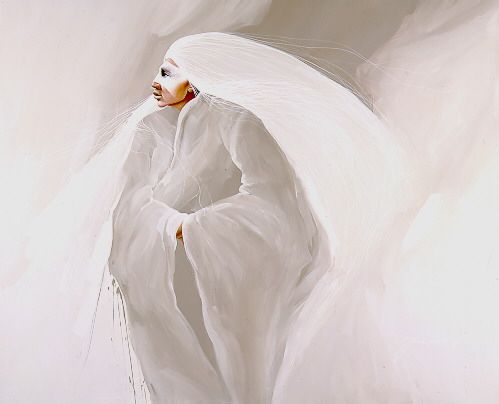
By: Dorreen Yellow Bird
Published Wednesday, May 16, 2007 - Grand Forks Herald
As an elder, I often turn around to look at the past. The path I've traveled is not always as I expected it would be when I was 16 years old. I say this because it couldn't have been more evident then at the Mother's Day powwow and celebration at White Shield, N.D., last weekend. I felt both sadness and pride at the changes in this cultural event.
I know life rarely stays the same, I told my sister. I know, I said again, looking at her. Everything is evolving, but the evolution of American Indian culture doesn't feel good. She laughed and said, “You're just getting old.” And perhaps that's true.
A good change, I explained to her, can be found in the evolution of the refrigerator or that big hulking Suburban van that our brother, Don, used to be so proud of. The refrigerator went from the ice box - and on the reservation 66 years ago, it was an ice box - to one of those really fancy, right-from-Modern-Homes-magazine models. As for cars, I love their changes; they went from cranking the starter to antilock brakes, stability control and so on.
In contrast, changes in Native culture are more subtle, yet they can hit me hard. When I heard the songs and drumming last weekend, memories of past drum songs echoed in my ears, and I knew the sounds that I now was hearing were different.
The young singers probably don't realize it, because we are now mostly English speakers and listen like English speakers, too. So, I think the words and sounds of the Native singers 60 years ago would sound foreign to the new “Ree Boys” group at the powwow, and they are good drum group . . . for youngsters.
Yet it is the drum songs of the old singers that went right into my soul and wrenched my spirit. My ears missed the old sounds.
When I was young, the powwow celebrations went on for three days and nights. I sometimes would stop visiting and carrying on with teen friends and just listen to the drumming. There was something about the sounds that made chills run up my spine. It was as if the ancestors were reaching out from the past and touching my heart.
It's at those moments I realize that my grandmother was right when she told me we are vessels of our ancestors - we carry them in our spirit. They always are a part of us. I was listening to those songs with their ears.
As I sat there over the weekend watching the dancers and singers, memories of being a a child and attending gatherings like this one came to me. I remember lying on the floor on a blanket while my grandmother and family took part in a cultural events in a building that took the place of the years-ago medicine lodge. I would doze in spite of the loud drum music and singing.
Late at night, the kerosene lamps would be lit. I could feel the rhythm of the dancers as the wooden floor moved with their moccasin steps. There was my grandmother - simple cotton dance dress, hands on her hips, head held high, waving a white handkerchief as she made sounds of praise and rounded the small dance circle. It's an image that will stay with me forever.
Funny, I can even remember the little round balls of mud that must have come in the doors on the feet of the dancers. I'd watched from my floor view as the little balls jumped and danced with the movement of the people.
My sister's voice brought me back to the White Shield powwow and the Ralph Wells complex. Just think, she said, the complex will soon be replaced by a new culture center - replaced like many of our ways, I thought.
My granddaughter, Eliza, who is a beautiful 19-year-old and my equally beautiful 5-year-old granddaughter, Allaya, are fancy shawl dancers. When Eliza dances, she is so light on her feet, it's as if she's dancing on air and the brightly colored shawl with the long, long fringe looks like butterfly wings as she gently dips and moves. Granddaughter Allaya is learning and has great potential.
Today's dancers have taken the culture into new territory. I know because the fancy shawl dance wasn't part of women's dancing 60 years ago. It is part of the cultural evolution.
My grandmother would say young women shouldn't kick their legs or step that high. That is too much like men's dancing. Women's dancing is of pride and praise for our tribe and the Creator, she'd say.
As I sat watching the powwow celebration, I felt sad for ways that were disappearing. We're losing more and more of who we were. How much of ourselves can we give away to the white ways and still maintain who we are? I wondered.
Wednesday, May 16, 2007


Tuesday, May 15, 2007
Traditional in Our Own Way
Holy Grandfathers,
Let the wind blow,
And the rain flow,
The people shall learn,
While their hearts yearn,
For we are traditional in our way,
Each and every day.
Holy Grandfathers,
Warmth and heat will be higher,
And across the land will be fire,
These things will be great,
And man shall know fate,
For we are traditional in our way,
Each and every day.
Holy Grandfathers,
Rivers, lakes and streams,
Carry life's dreams,
And waters will rush ashore,
In the directions of the Four,
For we traditional in our own way,
Each and every day.
Holy Grandfathers,
Hear the cries of mankind,
They know not of the time,
Silent will become man,
Once they understand,
That we the Sovereign Nations,
Are from unique generations,
For we are traditional in our own way,
In our lives each and every day.
Written: Friday, May 9, 2003
By: Larry KibbyElko Indian Colony, Nevada
Do you know...
Joanne Shenandoah, one of the country's most prolific Native musicians doesn't need any tricks to coax the muse. "Whenever I need a song, I sit down and write one," Shenandoah says, although she hastily adds a modest disclaimer. "I don't take personal credit for my songs; they're all ancestrally inspired. When I listen to Once in a Red Moon (Shenandoah's 1994 release for Canyon Records), for example, the songs still amaze me. I can hear the voices of the past and future coming through."
Shenandoah, a member of the Oneida Nation, was born in Iroquois territory, and was given the name Takalihwa kwha - She Sings. Ted Silverhand, an elder in the Tuscarora clan, one of the six nations that make up the Iroquois, had a vision of Shenandoah's successful musical career when she was a baby and she's more than lived up to his prediction. Shenandoah has performed at both Clinton inaugurals, contributed music to the soundtrack of "Northern Exposure," "How the West Was Lost" and "Indian in the Cupboard," been nominated for a Pulitzer Prize in music for her composition "Ganondagan," written books, performed at Pow Wows, clubs and music festivals in France, Canada and The United Stares, and recorded six albums including her latest, All Spirits Sing, a coming of age story for children.
Shenandoah, a member of the Oneida Nation, was born in Iroquois territory, and was given the name Takalihwa kwha - She Sings. Ted Silverhand, an elder in the Tuscarora clan, one of the six nations that make up the Iroquois, had a vision of Shenandoah's successful musical career when she was a baby and she's more than lived up to his prediction. Shenandoah has performed at both Clinton inaugurals, contributed music to the soundtrack of "Northern Exposure," "How the West Was Lost" and "Indian in the Cupboard," been nominated for a Pulitzer Prize in music for her composition "Ganondagan," written books, performed at Pow Wows, clubs and music festivals in France, Canada and The United Stares, and recorded six albums including her latest, All Spirits Sing, a coming of age story for children.
http://www.hanksville.org/jpoet/shenandoah.html
Click link to read more.
Shenandoah, a member of the Oneida Nation, was born in Iroquois territory, and was given the name Takalihwa kwha - She Sings. Ted Silverhand, an elder in the Tuscarora clan, one of the six nations that make up the Iroquois, had a vision of Shenandoah's successful musical career when she was a baby and she's more than lived up to his prediction. Shenandoah has performed at both Clinton inaugurals, contributed music to the soundtrack of "Northern Exposure," "How the West Was Lost" and "Indian in the Cupboard," been nominated for a Pulitzer Prize in music for her composition "Ganondagan," written books, performed at Pow Wows, clubs and music festivals in France, Canada and The United Stares, and recorded six albums including her latest, All Spirits Sing, a coming of age story for children.
Shenandoah, a member of the Oneida Nation, was born in Iroquois territory, and was given the name Takalihwa kwha - She Sings. Ted Silverhand, an elder in the Tuscarora clan, one of the six nations that make up the Iroquois, had a vision of Shenandoah's successful musical career when she was a baby and she's more than lived up to his prediction. Shenandoah has performed at both Clinton inaugurals, contributed music to the soundtrack of "Northern Exposure," "How the West Was Lost" and "Indian in the Cupboard," been nominated for a Pulitzer Prize in music for her composition "Ganondagan," written books, performed at Pow Wows, clubs and music festivals in France, Canada and The United Stares, and recorded six albums including her latest, All Spirits Sing, a coming of age story for children.
http://www.hanksville.org/jpoet/shenandoah.html
Click link to read more.
Sand Creek Massacre National Historic Site dedicated
LA JUNTA, Colo. - Tribal leaders from the Northern Cheyenne, Southern Cheyenne and Arapaho tribes, along with the National Park Service and nearly 500 others, gathered April 28 to dedicate the Sand Creek Massacre National Historic Site.
After a prayer from Cheyenne Chief Gordon Yellowman, various Indian and non-Indian dignitaries spoke on the tragic event.
''Imagine a place of where families eat, sleep, learn; a place where people share knowledge, live in peace and where children run and play; a place where flags are flown to represent protection; a place of safety and security,'' said Northern Cheyenne President Eugene Little Coyote. ''Now imagine this place disturbed by chaos, gunshots, cries and pleas from the innocent; peace disrupted by attacks of inhumanity. I could be describing the violent events that occurred a few weeks ago on a college campus; an event described as 'the most tragic event in American history,' but I am not. I am talking about the Sand Creek Massacre.''
On Nov. 29, 1864, the Colorado Territory Militia, under the command of Methodist minister Col. John Chivington, attacked the camp of Southern Cheyenne Chief Black Kettle. Although Black Kettle raised an American flag and a white flag of peace, the militia were instructed by Chivington to ''kill and scalp all, big and little; nits make lice.'' Nearly 240 Cheyenne and Arapaho people were murdered, mostly women and children. Women were raped and the dead were mutilated. Body parts of the slain Indians were paraded though Denver in celebration of the massacre.
http://www.indiancountry.com/content.cfm?id=1096415018
Click link to read full article.
Goldman Prize awarded to environmental activists
SAN FRANCISCO - A Shipibo activist who helped create a protected area for Amazonian people living in voluntary isolation and an Ojibway leader who has worked with her community to save 2 million acres of the Boreal Forest in Manitoba, Canada, were among six people awarded the 2007 Goldman Environmental Prize in San Francisco April 23.
The $125,000 award, now in its 18th year, is given to people from all over the world who have made a difference with their environmental work.
Shipibo activist Julio Cusurichi Palacios and Ojibway representative Sophia Rabliauskas both emphasized traditional indigenous respect for the land in their acceptance speeches, as well as the need for all people to work together to save the planet.
''The world doesn't have the authority to subject [un-contacted] peoples to a different way of life. We all have the right to live in peace in the Amazon territories,'' Palacios said, noting that the increasing presence of multinational oil and gas companies was adding to the problem of illegal logging in the Madre de Dios region of Peru where many isolated peoples live. These people are vulnerable not only to cultural change but to physical disease brought by outside contact, he said.
http://www.indiancountry.com/content.cfm?id=1096414989
Click link to read full story.
Monday, May 14, 2007
Tribal Celebration: A Gift from the Heart: Ancestral land returned
PAWNEE -- It was called a day of blessing at the Pawnee Nation.
Over 100 tribal members and their band chiefs gathered Saturday at the Pawnee danceground to honor Roger Welsch and his wife, Linda, for their gift of some 60 acres of pristine Nebraska farmland.
Welsch, a writer, is also a history buff who learned through his research that the Pawnees once inhabited the area where he lives near Dannebrog, Neb., particularly land around the Loup River.
The deed to the land was given to the 3,000-member tribe in a ceremony punctuated by the Welsches receiving honorary Pawnee tribal membership. The event started with a pipe ceremony followed by a feast, an honor dance and concluded with a cedar ceremony for the man who said he was moved to give the land back to the people who he felt had rightful ownership.
"It's something we had no choice in because it had to be done," Welsch said. "These people are not guests on our land, but rather we are guests on their land."
http://www.moderndaywarrior.org/
Click link to read full story.
Public will get to see native artifacts collection
GREAT FALLS - What is believed to be a priceless collection of American Indian artifacts awaits a final destination.
"I'm currently holding a letter from Black Elk in my hand, and that's an experience I never expected to have happen," said the Flathead Gallery's Don Baughman, who was brought in to appraise the estate of the late David Humphreys Miller.
In the letter, the legendary Sioux chief wrote Miller that he would sponsor a Sun Dance and pray for his safe return from service in Germany during World War II.
"This is a once-in-a-lifetime opportunity," Baughman said. "This morning I've been asking myself how I can put a value on something that's essentially priceless."
http://www.nativebiz.com/community/News,op=visit,nid=15406.html
Click link to read full story.
Subscribe to:
Posts (Atom)


