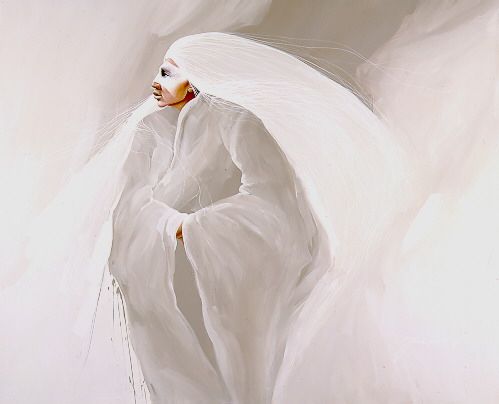
Though we've shared this website on the blog in the past it is one of our favorites and so it is the first in our feature.
About Four Directions Teachings.com:
Four Directions Teachings celebrates Indigenous oral traditions by honoring the process of listening with intent as each elder or traditional teacher shares a teaching from their perspective on the richness and value of cultural traditions from their nation. In honor of the timelessness of Indigenous oral traditions, audio narration is provided throughout the site, complimented by beautifully animated visuals. In addition, the site provides free curriculum packages for grades 1 to 12 to further explore the vast richness of knowledge and cultural philosophy that is introduced within each teaching. The curriculum is provided in downloadable PDF and can also be read online through the Teacher’s Resources link. The elders and traditional teachers who have shared a teaching on this site were approached through a National Advisory Committee of Indigenous people concerned with the protection and promotion of Indigenous knowledge. This committee was formed directly for the purposes of this website to ensure a community based approach that was respectful and accountable.
Check it out! You won't be disappointed. www.fourdirectionsteachings.com
Monday, July 23, 2007


Featured Artist - Sherman J. Alexie, Jr. - Spokane
A member of 100 Native Americans Who Shaped American History (published 2002)
Sherman J. Alexie, Jr., was born in October 1966. A Spokane/Coeur d'Alene Indian, he grew up on the Spokane Indian Reservation in Wellpinit, WA, about 50 miles northwest of Spokane, WA. Approximately 1,100 Spokane Tribal members live there.
Born hydrocephalic, which means with water on the brain, Alexie underwent a brain operation at the age of 6 months and was not expected to survive. When he did beat the odds, doctors predicted he would live with severe mental retardation. Though he showed no signs of this, he suffered severe side effects, such as seizures and uncontrollable bed-wetting, throughout his childhood. In spite of all he had to overcome, Alexie learned to read by age three, and devoured novels, such as John Steinbeck's The Grapes of Wrath, by age five. All these things ostracized him from his peers, though, and he was often the brunt of other kids' jokes on the reservation.
As a teenager, after finding his mother's name written in a textbook assigned to him at the Wellpinit school, Alexie made a conscious decision to attend high school off the reservation in Reardan, WA, about 20 miles south of Wellpinit, where he knew he would get a better education. At Reardan High he was the only Indian, except for the school mascot. There he excelled academically and became a star player on the basketball team.
In 1985 Alexie graduated Reardan High and went on to attend Gonzaga University in Spokane on scholarship. After two years at Gonzaga, he transferred to Washington State University (WSU) in Pullman, WA.
Alexie planned to be a doctor and enrolled in pre-med courses at WSU, but after fainting numerous times in human anatomy class realized he needed to change his career path. That change was fueled when he stumbled into a poetry workshop at WSU.
He has since gone on to win numerous awards and honors for such works as Smoke Signals. A poet, stand-up comic, playwright, are just among his many talents.
Learn more here: http://www.fallsapart.com/biography.html
Sherman J. Alexie, Jr., was born in October 1966. A Spokane/Coeur d'Alene Indian, he grew up on the Spokane Indian Reservation in Wellpinit, WA, about 50 miles northwest of Spokane, WA. Approximately 1,100 Spokane Tribal members live there.
Born hydrocephalic, which means with water on the brain, Alexie underwent a brain operation at the age of 6 months and was not expected to survive. When he did beat the odds, doctors predicted he would live with severe mental retardation. Though he showed no signs of this, he suffered severe side effects, such as seizures and uncontrollable bed-wetting, throughout his childhood. In spite of all he had to overcome, Alexie learned to read by age three, and devoured novels, such as John Steinbeck's The Grapes of Wrath, by age five. All these things ostracized him from his peers, though, and he was often the brunt of other kids' jokes on the reservation.
As a teenager, after finding his mother's name written in a textbook assigned to him at the Wellpinit school, Alexie made a conscious decision to attend high school off the reservation in Reardan, WA, about 20 miles south of Wellpinit, where he knew he would get a better education. At Reardan High he was the only Indian, except for the school mascot. There he excelled academically and became a star player on the basketball team.
In 1985 Alexie graduated Reardan High and went on to attend Gonzaga University in Spokane on scholarship. After two years at Gonzaga, he transferred to Washington State University (WSU) in Pullman, WA.
Alexie planned to be a doctor and enrolled in pre-med courses at WSU, but after fainting numerous times in human anatomy class realized he needed to change his career path. That change was fueled when he stumbled into a poetry workshop at WSU.
He has since gone on to win numerous awards and honors for such works as Smoke Signals. A poet, stand-up comic, playwright, are just among his many talents.
Learn more here: http://www.fallsapart.com/biography.html
'Traditional Alliance Day' declared during Little Bighorn commemoration
By: Leo Killsback
CROW AGENCY, Mont. - On June 25, 1876, the 7th Cavalry of the U.S. Army, under the command of Lt. Col. George Armstrong Custer, was defeated by seven bands of the allied Cheyenne, Arapaho and Lakota nations. June 25 marked the 131st anniversary of what is known as the Battle of the Little Bighorn.
Nearly 200 people who attended the Little Bighorn commemoration that day witnessed the presentation of an executive proclamation from Oglala Sioux Tribal President John Steele and the Lakota Treaty Council that declared June 25 as ''Traditional Alliance Day'' for the Oglala Sioux Nation.
The proclamation reflected on the victory at the Battle of the Little Bighorn as the traditional allies of the Cheyenne, Lakota and Arapaho protected their land and way of life against a ''military machine,'' the U.S. Army. It also described the encroachment on Bear Butte as an ''utter disregard for human rights.''
''History has shown that when the traditional allied nations of the Cheyenne, Lakota and Arapaho people are unified and work together, we can never be defeated,'' Northern Cheyenne Tribal President Eugene Little Coyote said. ''Today our people continue to fight battles to protect our inherent sovereign rights, our rights as indigenous people, and our human rights. We will rekindle this alliance to protect the sanctity of a shared sacred mountain. This mountain is Noavose to the Cheyenne, Mato Paha to the Lakota, but is commonly known as Bear Butte.''
Want the whole story? Click here: http://www.indiancountry.com/content.cfm?id=1096415426
CROW AGENCY, Mont. - On June 25, 1876, the 7th Cavalry of the U.S. Army, under the command of Lt. Col. George Armstrong Custer, was defeated by seven bands of the allied Cheyenne, Arapaho and Lakota nations. June 25 marked the 131st anniversary of what is known as the Battle of the Little Bighorn.
Nearly 200 people who attended the Little Bighorn commemoration that day witnessed the presentation of an executive proclamation from Oglala Sioux Tribal President John Steele and the Lakota Treaty Council that declared June 25 as ''Traditional Alliance Day'' for the Oglala Sioux Nation.
The proclamation reflected on the victory at the Battle of the Little Bighorn as the traditional allies of the Cheyenne, Lakota and Arapaho protected their land and way of life against a ''military machine,'' the U.S. Army. It also described the encroachment on Bear Butte as an ''utter disregard for human rights.''
''History has shown that when the traditional allied nations of the Cheyenne, Lakota and Arapaho people are unified and work together, we can never be defeated,'' Northern Cheyenne Tribal President Eugene Little Coyote said. ''Today our people continue to fight battles to protect our inherent sovereign rights, our rights as indigenous people, and our human rights. We will rekindle this alliance to protect the sanctity of a shared sacred mountain. This mountain is Noavose to the Cheyenne, Mato Paha to the Lakota, but is commonly known as Bear Butte.''
Want the whole story? Click here: http://www.indiancountry.com/content.cfm?id=1096415426
Holy Road
Associated Press
Western Shoshone leader dies at 87
RENO, Nev. (AP) - Corbin Harney, a spiritual leader of the Western Shoshone who challenged the federal government - and once his own tribe - to oppose nuclear weapons on aboriginal land has died at the age of 87.
Harney, a fixture at anti-nuclear rallies, died July 10 of complications from cancer near Santa Rosa, Calif., where he had hoped to finish a book, according to his family.
''We have truly lost a lot,'' said his nephew, Santiago Lozada, who was with him when he died. ''
Corbin was a World War II veteran and was known around the world for his activism against radioactivity and nuclear weapons,'' said Robert Hager, Reno-based lawyer for the Western Shoshone tribe. ''He's irreplaceable to the Western Shoshone nation.''
''He was someone who just had this gentle spirit but a steely resolve that people should do the right thing,'' Hager said. ''He thought people would eventually come around and realize the harm people were doing to Mother Earth.''
Hager recalled that Harney bucked his own tribe when the federal government in the 1950s unearthed remains of Western Shoshone ancestors during digging for nuclear testing at the Nevada Test Site north of Las Vegas.
''He picked up the remains and gave them a decent burial,'' Hager said. ''He took a lot of flak from Western Shoshone leaders who said he should have nothing to do with the U.S. government. But I always respected Corbin for doing what, to the Western Shoshone, was not politically correct but in his mind was the right thing to do.''
Read full article here: http://www.indiancountry.com/content.cfm?id=1096415429
Western Shoshone leader dies at 87
RENO, Nev. (AP) - Corbin Harney, a spiritual leader of the Western Shoshone who challenged the federal government - and once his own tribe - to oppose nuclear weapons on aboriginal land has died at the age of 87.
Harney, a fixture at anti-nuclear rallies, died July 10 of complications from cancer near Santa Rosa, Calif., where he had hoped to finish a book, according to his family.
''We have truly lost a lot,'' said his nephew, Santiago Lozada, who was with him when he died. ''
Corbin was a World War II veteran and was known around the world for his activism against radioactivity and nuclear weapons,'' said Robert Hager, Reno-based lawyer for the Western Shoshone tribe. ''He's irreplaceable to the Western Shoshone nation.''
''He was someone who just had this gentle spirit but a steely resolve that people should do the right thing,'' Hager said. ''He thought people would eventually come around and realize the harm people were doing to Mother Earth.''
Hager recalled that Harney bucked his own tribe when the federal government in the 1950s unearthed remains of Western Shoshone ancestors during digging for nuclear testing at the Nevada Test Site north of Las Vegas.
''He picked up the remains and gave them a decent burial,'' Hager said. ''He took a lot of flak from Western Shoshone leaders who said he should have nothing to do with the U.S. government. But I always respected Corbin for doing what, to the Western Shoshone, was not politically correct but in his mind was the right thing to do.''
Read full article here: http://www.indiancountry.com/content.cfm?id=1096415429
Sunday, July 22, 2007
Featured Tribe - PeDee of South Carolina
The Pedee are first mentioned by the colonists of South Carolina. In 1716 a place in or near their country called Saukey (perhaps Socatee) was suggested as the site for a trading post but the proposition to establish one there was given up owing to the weakness of the Pedce tribe, who were thought to be unable to protect it.
In 1744, the Pedee, along with Natchez Indians, killed some Catawba and were in consequence driven from their lands into the White settlements. Soon afterward most of them joined the Catawba, but some remained near the Whites, where they are mentioned as late as 1755. In 1808 the Pedee and Cape Fear tribes were represented by one half-breed woman.
Pedee Population.- Mooney, 1900, estimates the number of Pedee as 600 in 1600. The census of 1715 does not give them separate mention, and they were probably included among the 610 Waccamaw or the 106 Winyaw.
Pedee Connection in which they have become noted.- The Great and Little Pee Dee Rivers and a station in Marion County, S. C., also a post village in Anson County, N. C., perpetuate the name of the Pedee.
In 1744, the Pedee, along with Natchez Indians, killed some Catawba and were in consequence driven from their lands into the White settlements. Soon afterward most of them joined the Catawba, but some remained near the Whites, where they are mentioned as late as 1755. In 1808 the Pedee and Cape Fear tribes were represented by one half-breed woman.
Pedee Population.- Mooney, 1900, estimates the number of Pedee as 600 in 1600. The census of 1715 does not give them separate mention, and they were probably included among the 610 Waccamaw or the 106 Winyaw.
Pedee Connection in which they have become noted.- The Great and Little Pee Dee Rivers and a station in Marion County, S. C., also a post village in Anson County, N. C., perpetuate the name of the Pedee.
The story of the drum
An Abenaki Legend
It is said that when Creator was giving a place for all the spirits to dwell who would be taking part in the inhabitance of Mother Earth, there came a sound, a loud BOOM, from off in the distance.
As Creator listened, the sound kept coming closer and closer until finally it was right in front of Creator.
"Who are you?" asked Creator.
"I am the spirit of the drum" was the reply. I have come here to ask you to allow me to take part in this wonderful thing."
"How will you take part?" Creator questioned.
"I would like to accompany the singing of the people. When they sing from their hearts, I will sing, too, as though I was the heartbeat of Mother Earth. In that way, all creation will sing in harmony."
Creator granted the request, and from then on, the drum accompanied the people's voices.
It is said that when Creator was giving a place for all the spirits to dwell who would be taking part in the inhabitance of Mother Earth, there came a sound, a loud BOOM, from off in the distance.
As Creator listened, the sound kept coming closer and closer until finally it was right in front of Creator.
"Who are you?" asked Creator.
"I am the spirit of the drum" was the reply. I have come here to ask you to allow me to take part in this wonderful thing."
"How will you take part?" Creator questioned.
"I would like to accompany the singing of the people. When they sing from their hearts, I will sing, too, as though I was the heartbeat of Mother Earth. In that way, all creation will sing in harmony."
Creator granted the request, and from then on, the drum accompanied the people's voices.
Campbell calls tribes to a more careful approach to energy production
By: Jerry Reynolds
WASHINGTON - At a well-attended two-day conference in Washington on tribal energy issues, former Sen. Ben Nighthorse Campbell said the nation can learn from the traditional thinking of tribes as it grapples with energy production processes that must account for global warming. For their part, under new energy law, tribes can prosper without sacrificing their cultures to energy production, and they can serve the nation's energy needs.
The conference, conducted by Law Seminars International, drew a full house of tribal leaders and featured discussions that would never have emerged from behind closed doors only 10 years ago. A full report on the proceedings is forthcoming. But as an appetizer, Campbell set the table as only he can.
''You don't get an all good result of energy production without some negative offset somewhere,'' he said July 18. ''I guess what we have to do, from the standpoint of Indian country ... is that we have to go back to our old belief about the seventh generation, and make sure that what we're doing is not going to do more damage than good in the future, and realize that there is a word called, words called, the concept of unintended consequences, and move along carefully, move along slowly. Use models that have already been proven to the good ... and recognize that it's not going to be all a bowl of roses here. There's going to be something in there [energy development processes] you're probably going to have to deal with and you might not like. But taking the precautions ahead of time and trying to offset that, I think, is the best interest of the tribes ... trying to keep in place their cultural, religious integrity.''
Want to know more? Click here: http://www.indiancountry.com/content.cfm?id=1096415444
WASHINGTON - At a well-attended two-day conference in Washington on tribal energy issues, former Sen. Ben Nighthorse Campbell said the nation can learn from the traditional thinking of tribes as it grapples with energy production processes that must account for global warming. For their part, under new energy law, tribes can prosper without sacrificing their cultures to energy production, and they can serve the nation's energy needs.
The conference, conducted by Law Seminars International, drew a full house of tribal leaders and featured discussions that would never have emerged from behind closed doors only 10 years ago. A full report on the proceedings is forthcoming. But as an appetizer, Campbell set the table as only he can.
''You don't get an all good result of energy production without some negative offset somewhere,'' he said July 18. ''I guess what we have to do, from the standpoint of Indian country ... is that we have to go back to our old belief about the seventh generation, and make sure that what we're doing is not going to do more damage than good in the future, and realize that there is a word called, words called, the concept of unintended consequences, and move along carefully, move along slowly. Use models that have already been proven to the good ... and recognize that it's not going to be all a bowl of roses here. There's going to be something in there [energy development processes] you're probably going to have to deal with and you might not like. But taking the precautions ahead of time and trying to offset that, I think, is the best interest of the tribes ... trying to keep in place their cultural, religious integrity.''
Want to know more? Click here: http://www.indiancountry.com/content.cfm?id=1096415444
Subscribe to:
Posts (Atom)


