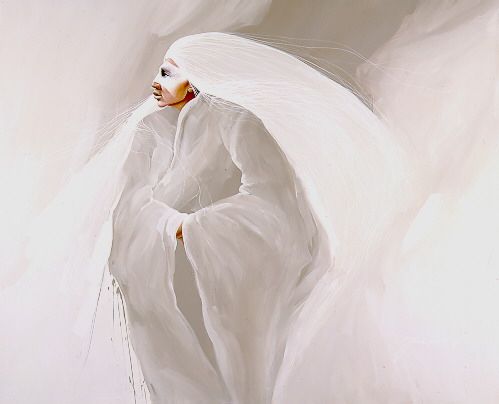
National Congress of American Indians
The NCAI was founded in 1944 in response to termination and assimilation policies that the United States forced upon the tribal governments in contradiction of their treaty rights and status as sovereigns. NCAI stressed the need for unity and cooperation among tribal governments for the protection of their treaty and sovereign rights. Since 1944, the National Congress of American Indians has been working to inform the public and Congress on the governmental rights of American Indians and Alaska Natives.
Over a half a century later, our goals remain unchanged. NCAI has grown over the years from its modest beginnings of 100 people to include 250 member tribes from throughout the United States. Now serving as the major national tribal government organization, NCAI is positioned to monitor federal policy and coordinated efforts to inform federal decisions that affect tribal government interests.
Now as in the past, NCAI serves to secure for ourselves and our descendants the rights and benefits to which we are entitled; to enlighten the public toward the better understanding of the Indian people; to preserve rights under Indian treaties or agreements with the United States; and to promote the common welfare of the American Indians and Alaska Natives.
Check it out! http://www.ncai.org
Thursday, July 26, 2007


Today in history...
1763: Fort Sandusky (in Ohio) is destroyed by Indians on May 16th. Detroit is also being besieged. Captain James Dalyell and almost 300 soldiers arrive on the southern shore of Lake Erie. They find many bodies and the remnants of structures. His forces immediately march against a Wyandot village near modern Fremont.
1824: Seminole Principal Chief Neamathla (also called Eneah Emathla) has managed to avoid removing his people from Florida to the west. Florida Governor William Duval has become convinced that Neamathla is planning another uprising. The Governor officially removes Neamathla from his position as Chief.
1824: Seminole Principal Chief Neamathla (also called Eneah Emathla) has managed to avoid removing his people from Florida to the west. Florida Governor William Duval has become convinced that Neamathla is planning another uprising. The Governor officially removes Neamathla from his position as Chief.
'Native Americans of Arizona' - book review
by: Lee Allen
TUCSON, Ariz. - How serendipitous is this? A husband and wife who deal in out-of-print books, prints and postcards attend an Arizona Historical Society convention and set up their booth right next to a history book publishing company that specializes in ''postcard history'' books.
The result is ''Native Americans of Arizona,'' 225 postcard images from the 1,500-postcard collection of Tucsonans Paul and Kathleen Nickens crafted into book form by Arcadia Publishing to offer a wide-ranging overview of the rich imagery of Native people in Arizona in the early 1900s.
''Picture postcards were used by promoters like the Fred Harvey Company and the Santa Fe Railroad to sell the Southwest. Travelers came from the East, where they got on a train at one end and traveled on that train car to the other end visiting designated tourist stops in Arizona and New Mexico, where they took side trips to buy postcards and picture books to validate their trip,'' said Paul Nickens, an archaeologist specializing in the American Southwest who now sells Southwestern collectibles (www.SabinoBooks.com).
''This focuses on Arizona's 21 tribes and nations and is a pictorial walk-through of the history of the first half of the 21st century,'' he said. ''There are images in here that are real gems, probably not seen elsewhere, that couldn't be replicated today. Some of these images were spontaneous, some posed, and if you look at them with a critical eye, you'll see the details of the time.''
There's more here: http://www.indiancountry.com/content.cfm?id=1096415452
TUCSON, Ariz. - How serendipitous is this? A husband and wife who deal in out-of-print books, prints and postcards attend an Arizona Historical Society convention and set up their booth right next to a history book publishing company that specializes in ''postcard history'' books.
The result is ''Native Americans of Arizona,'' 225 postcard images from the 1,500-postcard collection of Tucsonans Paul and Kathleen Nickens crafted into book form by Arcadia Publishing to offer a wide-ranging overview of the rich imagery of Native people in Arizona in the early 1900s.
''Picture postcards were used by promoters like the Fred Harvey Company and the Santa Fe Railroad to sell the Southwest. Travelers came from the East, where they got on a train at one end and traveled on that train car to the other end visiting designated tourist stops in Arizona and New Mexico, where they took side trips to buy postcards and picture books to validate their trip,'' said Paul Nickens, an archaeologist specializing in the American Southwest who now sells Southwestern collectibles (www.SabinoBooks.com).
''This focuses on Arizona's 21 tribes and nations and is a pictorial walk-through of the history of the first half of the 21st century,'' he said. ''There are images in here that are real gems, probably not seen elsewhere, that couldn't be replicated today. Some of these images were spontaneous, some posed, and if you look at them with a critical eye, you'll see the details of the time.''
There's more here: http://www.indiancountry.com/content.cfm?id=1096415452
Indian House
by: Patti Jo King
Forty years of uncompromising traditional music recording
TAOS, N.M. - In 1966, Tony Isaacs and his wife, Ida, opened a small arts and crafts shop next to their home in Taos. Over the next 41 years, that shop, Indian House, became an important connection for Indians across the nation to find traditional Native music recordings. It all started with Tony's passion for authentic Indian music.
Back in the 1940s, 14-year-old Isaacs purchased a 78 rpm Soundchiefs recording of a Plains drum group in a Los Angeles record store. His purpose was to learn an Indian song for his Boy Scout troop. Surprised by the complexity of the music, he began buying more records and trying to learn all he could about the music's structure.
In 1954, he visited the Flagstaff Pow Wow and, in 1956, the Anadarko Exposition.
''I was completely bowled over,'' he said. ''I was learning the music from old 78s. Those recordings were mostly a couple of guys playing a drum and singing, but at the pow wows I saw maybe 25 guys singing around the drums. I could hear and feel the power of the music for the first time. It was thrilling.''
One of the first things Isaacs noticed was the way dancers in the arena instinctively stop on the last beat of the song.
''There were 200 dancers,'' he recalled. ''Every one of them, young or old, knew how to stop dancing on the last beat of the song. I was puzzled. How did they know when to end?'' He asked different drummers how they knew when the song was going to end. He said they all gave the same answer. ''Don't know. You can just tell.'' That was when he realized that the music is an inherent part of the people who grow up in and around it.
Read more here: http://www.indiancountry.com/content.cfm?id=1096415450
Forty years of uncompromising traditional music recording
TAOS, N.M. - In 1966, Tony Isaacs and his wife, Ida, opened a small arts and crafts shop next to their home in Taos. Over the next 41 years, that shop, Indian House, became an important connection for Indians across the nation to find traditional Native music recordings. It all started with Tony's passion for authentic Indian music.
Back in the 1940s, 14-year-old Isaacs purchased a 78 rpm Soundchiefs recording of a Plains drum group in a Los Angeles record store. His purpose was to learn an Indian song for his Boy Scout troop. Surprised by the complexity of the music, he began buying more records and trying to learn all he could about the music's structure.
In 1954, he visited the Flagstaff Pow Wow and, in 1956, the Anadarko Exposition.
''I was completely bowled over,'' he said. ''I was learning the music from old 78s. Those recordings were mostly a couple of guys playing a drum and singing, but at the pow wows I saw maybe 25 guys singing around the drums. I could hear and feel the power of the music for the first time. It was thrilling.''
One of the first things Isaacs noticed was the way dancers in the arena instinctively stop on the last beat of the song.
''There were 200 dancers,'' he recalled. ''Every one of them, young or old, knew how to stop dancing on the last beat of the song. I was puzzled. How did they know when to end?'' He asked different drummers how they knew when the song was going to end. He said they all gave the same answer. ''Don't know. You can just tell.'' That was when he realized that the music is an inherent part of the people who grow up in and around it.
Read more here: http://www.indiancountry.com/content.cfm?id=1096415450
Wednesday, July 25, 2007
Featured Website: NARF.org
Founded in 1970, the Native American Rights Fund (NARF) is the oldest and largest nonprofit law firm dedicated to asserting and defending the rights of Indian tribes, organizations and individuals nationwide.
NARF’s practice is concentrated in five key areas: the preservation of tribal existence; the protection of tribal natural resources; the promotion of Native American human rights; the accountability of governments to Native Americans; and the development of Indian law and educating the public about Indian rights, laws, and issues.
The Native American Rights Fund (NARF) is a non-profit 501c(3) organization that provides legal representation and technical assistance to Indian tribes, organizations and individuals nationwide - a constituency that often lacks access to the justice system. NARF focuses on applying existing laws and treaties to guarantee that national and state governments live up to their legal obligations.
Check it out! http://www.narf.org/
NARF’s practice is concentrated in five key areas: the preservation of tribal existence; the protection of tribal natural resources; the promotion of Native American human rights; the accountability of governments to Native Americans; and the development of Indian law and educating the public about Indian rights, laws, and issues.
The Native American Rights Fund (NARF) is a non-profit 501c(3) organization that provides legal representation and technical assistance to Indian tribes, organizations and individuals nationwide - a constituency that often lacks access to the justice system. NARF focuses on applying existing laws and treaties to guarantee that national and state governments live up to their legal obligations.
Check it out! http://www.narf.org/
Tribe's chefs go beyond traditions
By Mara Zepeda
MASHPEE -- On this Sunday afternoon at the Mashpee Wampanoag Pow Wow, a bustling staff of relatives and "pow wow kids looking for work," as Sherry Pocknett calls them, congregate, awaiting instructions. They're in an airy, shaded outdoor kitchen, outfitted with two grills, a stove, refrigerator, and hand-woven baskets brimming with corn, squash, peppers, and kale. Pocknett, a Wampanoag chef, is preparing the cooking of her tribe.
Mention Wampanoag foodways, and clambakes and Thanksgiving spring to mind. But the Wampanoag culinary contributions extend beyond these traditions. Pocknett, 47, whose tribe won federal recognition last winter, is determined to preserve the cuisine. She started Sly Fox's Den, a food stand named after her father, which she takes around the country, touring pow wows and bazaars sponsored by Cultural Survival, a Cambridge-based organization that promotes indigenous cultures.
In Mashpee, Pocknett's daughter Jade, 18, sets out coolers of strawberry lemonade and iced sassafras tea. People find the sassafras intriguing. "Where do you buy this?" a customer asks. "We pick it," Pocknett replies, pointing to the knotty upright branches simmering away, releasing an earthy incense over stands serving hamburgers, hot dogs, and fried clams.
There's more here: http://www.boston.com/ae/food/articles/2007/07/25/tribes_chefs_go_beyond_traditions/
MASHPEE -- On this Sunday afternoon at the Mashpee Wampanoag Pow Wow, a bustling staff of relatives and "pow wow kids looking for work," as Sherry Pocknett calls them, congregate, awaiting instructions. They're in an airy, shaded outdoor kitchen, outfitted with two grills, a stove, refrigerator, and hand-woven baskets brimming with corn, squash, peppers, and kale. Pocknett, a Wampanoag chef, is preparing the cooking of her tribe.
Mention Wampanoag foodways, and clambakes and Thanksgiving spring to mind. But the Wampanoag culinary contributions extend beyond these traditions. Pocknett, 47, whose tribe won federal recognition last winter, is determined to preserve the cuisine. She started Sly Fox's Den, a food stand named after her father, which she takes around the country, touring pow wows and bazaars sponsored by Cultural Survival, a Cambridge-based organization that promotes indigenous cultures.
In Mashpee, Pocknett's daughter Jade, 18, sets out coolers of strawberry lemonade and iced sassafras tea. People find the sassafras intriguing. "Where do you buy this?" a customer asks. "We pick it," Pocknett replies, pointing to the knotty upright branches simmering away, releasing an earthy incense over stands serving hamburgers, hot dogs, and fried clams.
There's more here: http://www.boston.com/ae/food/articles/2007/07/25/tribes_chefs_go_beyond_traditions/
Connecting with art: Camp gives students taste of traditional native art
By Andi Murphy
FARMINGTON — A dozen Native American high school students sat in a room, concentrating hard on the beginning of a small loom in front of them.
Dozens of seemingly tangled strings loosely connected two wooden poles that would be the basis for a rug they will weave later. Native music played softly in the background as Lorraine Begay Manavi paced the room, assisting the students with the net of yarn before them.
Rug weaving was the first form of art introduced to the students on Monday's schedule for the second annual Native Youth Art Camp at San Juan College. Techniques and rug designs were taught by Manavi, San Juan's Navajo language and rug weaving instructor.
"I like it," Fernando Charley, 16, a Piedra Vista High School student, said about the course. Although, rug weaving is not his main art form, he enjoyed the session.
Read full article here: http://www.daily-times.com/news/ci_6447481
FARMINGTON — A dozen Native American high school students sat in a room, concentrating hard on the beginning of a small loom in front of them.
Dozens of seemingly tangled strings loosely connected two wooden poles that would be the basis for a rug they will weave later. Native music played softly in the background as Lorraine Begay Manavi paced the room, assisting the students with the net of yarn before them.
Rug weaving was the first form of art introduced to the students on Monday's schedule for the second annual Native Youth Art Camp at San Juan College. Techniques and rug designs were taught by Manavi, San Juan's Navajo language and rug weaving instructor.
"I like it," Fernando Charley, 16, a Piedra Vista High School student, said about the course. Although, rug weaving is not his main art form, he enjoyed the session.
Read full article here: http://www.daily-times.com/news/ci_6447481
Subscribe to:
Posts (Atom)


